Generative vs. Discriminative AI: What's the Core Difference and Why It Matters
Welcome to the official launch of Mastering AI Tech, my primary global platform for providing information about AI and tech. You've come to the right place. Please read my article.
Generative vs. Discriminative AI: What's the Core Difference and Why It Matters
Artificial intelligence, often a buzzword thrown around in boardrooms and tech blogs, isn't a monolith. It's a vast field, brimming with different approaches and methodologies. Today, I want to pull back the curtain on two fundamental types of AI models that are shaping our digital world: Generative AI and Discriminative AI. If you've ever wondered how does Generative AI work? A simple explanation for beginners, or why these distinctions are crucial for anyone looking to leverage AI, you're in the right place. Understanding their core differences isn't just academic; it profoundly impacts the kinds of problems we can solve and the solutions we can build.
Key Takeaways:
- Generative AI creates new data: It learns patterns from existing data to produce novel outputs like images, text, or audio, essentially understanding the underlying distribution of the data.
- Discriminative AI classifies existing data: It focuses on distinguishing between different categories or predicting labels for given inputs, without creating anything new.
- Choosing the right model matters: The specific problem you're trying to solve—whether it's creating content, detecting fraud, or recommending products—dictates whether a generative or discriminative approach is more appropriate and effective.
Understanding the Basics: What Are We Even Talking About?
Before we get into the nitty-gritty, let's establish a foundational understanding. At its heart, AI is about systems that can perceive their environment and take actions that maximize their chance of achieving a goal. Within this broad definition, machine learning—a subset of AI—empowers systems to learn from data without explicit programming. It's a fascinating domain, constantly evolving.
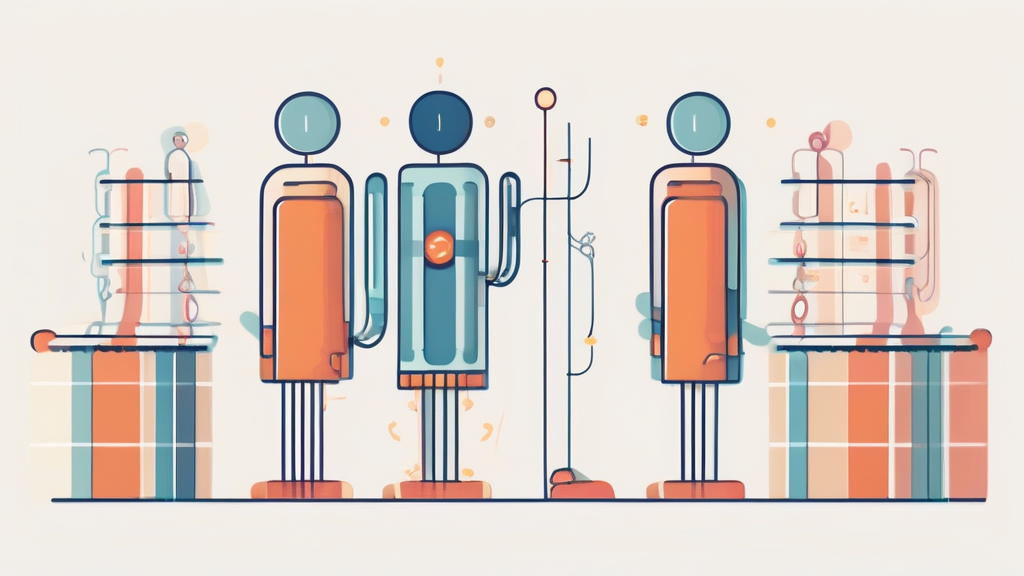
When we talk about Generative and Discriminative AI, we're discussing two distinct paradigms within machine learning that approach problem-solving from opposite angles. Think of it like this: one is an artist, the other is a critic. Both are essential, but their roles are fundamentally different.
The Artist: What is Generative AI?
Imagine an AI that can paint a landscape, write a poem, or compose a symphony, not by copying existing works, but by understanding the very essence of what makes a landscape, a poem, or a symphony. That's Generative AI. Its primary goal is to understand the underlying patterns and structure of a dataset so well that it can generate new, original data that resembles the training data.
It's not just stitching together pieces; it's creating something genuinely novel. This is why it's been making waves recently, with tools like ChatGPT, Midjourney, and Stable Diffusion becoming household names. They don't just recognize a cat; they can draw a new cat that's never existed before.
- Core Function: Generates new data instances.
- Learning Goal: To model the distribution of the input data (P(x)).
- Examples: Text generation, image synthesis, music composition, deepfakes.
The Critic: What is Discriminative AI?
On the flip side, we have Discriminative AI. This type of AI is less about creation and more about distinction. Its job is to learn the boundaries between different categories of data. If you show it a picture, it will tell you if it's a cat or a dog. If you give it an email, it will classify it as spam or not spam. It discriminates between different classes.
Discriminative models don't care about generating new data. Their focus is purely on prediction and classification. They learn a mapping from input features to output labels. Most of the AI applications we've interacted with over the past decade, from facial recognition on your phone to spam filters in your inbox, have been built on discriminative principles.
- Core Function: Classifies or predicts labels for given data.
- Learning Goal: To model the conditional probability of an output given an input (P(y|x)).
- Examples: Image classification, spam detection, sentiment analysis, medical diagnosis.
The Crucial Difference: P(x) vs. P(y|x)
If you want a slightly more technical, yet still simple, way to grasp the core difference, it boils down to what probability distribution they are trying to model. Generative models try to learn the joint probability distribution P(x, y), or often just the probability distribution of the data itself, P(x). This means they understand how likely it is to see certain features (x) and certain labels (y) together, or simply how data points are distributed in their space.
Because they understand the entire data distribution, they can then "sample" from it to create new data (x) or even generate x given y (e.g., generate a dog image given the label "dog").
Discriminative models, however, are only interested in the conditional probability P(y|x). They want to know, given some input (x), what is the probability of it belonging to a certain class (y)? They don't care about how x itself was generated or what the overall distribution of x looks like. They just want to draw the best possible line, plane, or complex boundary to separate the classes.
This is a fundamental distinction. One builds a complete world model; the other just learns the rules for categorizing things within that world.
How Does Generative AI Work? A Simple Explanation for Beginners
So, let's zero in on the burning question for many: how does Generative AI work? A simple explanation for beginners often starts by demystifying the process. Think of it like a student learning to draw. They don't just memorize specific drawings; they learn fundamental concepts: perspective, shading, composition, color theory. They practice by observing many examples and trying to recreate them, gradually improving until they can produce original pieces.
Generative AI models, particularly those based on neural networks, operate on a similar principle. They are trained on massive datasets of existing information—millions of images, billions of text passages, hours of audio. During this training, the model tries to learn the underlying patterns, structures, and relationships within that data.
The Magic Behind the Creation
There are several architectures that enable generative AI, but some common ones include:
- Generative Adversarial Networks (GANs): These involve two neural networks, a "generator" and a "discriminator," locked in a continuous battle. The generator creates fake data, trying to fool the discriminator. The discriminator tries to tell real data from fake data. This adversarial process drives both networks to improve, with the generator eventually becoming incredibly good at producing realistic new data.
- Variational Autoencoders (VAEs): VAEs learn to encode input data into a compressed "latent space" and then decode it back into its original form. The trick is that this latent space is designed to be continuous and well-structured, allowing the model to sample from it to generate new, similar data.
- Transformers (especially for text): Models like GPT (Generative Pre-trained Transformer) are excellent at predicting the next word in a sequence. By recursively predicting the next word, they can generate entire paragraphs, articles, or even books that are coherent and contextually relevant. They learn the intricate grammar, style, and factual relationships present in their training data.
- Diffusion Models: These are a newer, powerful class of models that learn to reverse a process of gradually adding noise to data. Imagine starting with a blurry, noisy image and learning how to "denoise" it step by step until a clear, new image emerges. This iterative refinement allows for incredibly high-quality image and audio generation.
The key takeaway is that these models don't just "copy-paste." They learn a deep, statistical understanding of the data's characteristics. When prompted, they use this understanding to synthesize entirely new outputs that share the statistical properties of the training data but are unique in their specific manifestation.
Why Does This Distinction Matter for You?
Understanding the difference between generative and discriminative AI isn't just for AI researchers. For online business owners, content creators, marketers, or anyone seeking practical solutions, this distinction is absolutely critical. It helps you choose the right tool for the job.
When to Use Discriminative AI: The Problem Solvers
If your goal is to make decisions, classify things, or predict outcomes based on existing data, you're likely looking at a discriminative model. These are your workhorses for:
- Fraud Detection: Identifying transactions that deviate from normal patterns.
- Customer Segmentation: Grouping customers based on behavior or demographics.
- Spam Filtering: Labeling unwanted emails.
- Medical Diagnosis: Classifying diseases based on symptoms or imaging.
- Recommendation Systems: Predicting what products a user might like based on past behavior.
- Sentiment Analysis: Determining if a review is positive or negative.
Discriminative models excel at these tasks because they are optimized to find the most effective decision boundary. They don't need to understand the full complexity of how a fraudulent transaction comes to be; they just need to know how to spot one.
When to Use Generative AI: The Creators and Innovators
When your objective shifts from prediction to creation, generation, or augmentation, that's when generative AI steps into the spotlight. This is where the magic happens for:
- Content Creation: Generating blog posts, marketing copy, social media updates, or even entire scripts.
- Personalized Marketing: Creating unique ad creatives or product descriptions tailored to individual users.
- Data Augmentation: Generating synthetic data to train other AI models, especially when real data is scarce or sensitive.
- Product Design: Rapidly prototyping new designs for anything from shoes to car parts.
- Art and Entertainment: Crafting new images, music, or video content.
- Drug Discovery: Designing novel molecular structures.
The power of generative AI lies in its ability to produce entirely new, coherent, and often highly creative outputs. For businesses, this translates into unprecedented opportunities for automation, personalization, and innovation.
Key Insight: While generative models can sometimes perform discriminative tasks (by first generating data and then classifying it), they are generally less efficient and accurate for pure classification than models specifically designed for discrimination. Conversely, discriminative models cannot create new content.
The Symbiotic Relationship: When They Work Together
It's not always an either/or situation. Sometimes, the most powerful AI solutions emerge when generative and discriminative models work in tandem. For instance, a generative model might create synthetic data to augment a small real dataset, which is then used to train a discriminative model for a classification task. Or, a generative model could propose multiple design options, and a discriminative model could evaluate which ones are most likely to succeed based on learned criteria.
Consider the process of developing a new product. A generative model could brainstorm thousands of design variations based on certain parameters. Then, a discriminative model, trained on historical sales data and customer feedback, could filter these designs, predicting which ones would be most appealing to the target market. This combination leverages the strengths of both approaches, leading to more robust and innovative solutions.
Looking Ahead: The Future is Hybrid
As AI continues its rapid evolution, we're seeing increasing sophistication in both generative and discriminative models. The lines might even blur further, with models incorporating elements of both. For instance, some advanced generative models can also perform impressive classification tasks as a byproduct of their deep understanding of data distribution.
My hope is that this explanation has clarified the fundamental differences and, more importantly, illuminated why these distinctions are so vital. Whether you're building an app, strategizing your next marketing campaign, or just trying to understand the tech headlines, knowing whether you need an artist or a critic will guide you toward more effective and impactful AI solutions.
The world of AI is dynamic, and staying informed about these core concepts empowers you to make smarter decisions. So, next time you encounter an AI application, take a moment to consider: Is it trying to create something new, or is it trying to classify what already exists? Your understanding of how does Generative AI work? A simple explanation for beginners will help you answer that question and unlock deeper insights.
Ready to Leverage AI for Your Business?
Understanding these concepts is just the first step. The real value comes from applying them. If you're an online business owner or someone seeking practical solutions, consider how these powerful AI paradigms could transform your operations, content strategy, or customer engagement. The opportunities are boundless, and the time to explore them is now.
Frequently Asked Questions (FAQ)
What are some real-world applications of Generative AI beyond text and image creation?
Generative AI extends far beyond text and image. It's used in drug discovery to design new molecules, in fashion to create novel apparel designs, in gaming for procedural content generation (e.g., creating unique landscapes or characters), for generating synthetic data to train other AI models, and even in music composition to produce original scores.
Is Generative AI always better than Discriminative AI?
No, neither is inherently "better" than the other; they serve different purposes. Generative AI excels at creating new content and understanding complex data distributions, while Discriminative AI is highly optimized for classification and prediction tasks. The choice depends entirely on the specific problem you're trying to solve. For tasks like spam detection or facial recognition, discriminative models are usually more efficient and accurate.
What are the limitations of Generative AI?
Generative AI, while powerful, has limitations. It can sometimes "hallucinate" or produce factually incorrect information, especially in text generation. It may also perpetuate biases present in its training data, leading to unfair or stereotypical outputs. Furthermore, controlling the exact output can be challenging, and generating truly novel, groundbreaking ideas (as opposed to variations on existing themes) remains a complex area of research.
As artificial intelligence continues to redefine what's possible in the digital space, staying informed and adaptable is your greatest advantage. Mastering AI Tech is deeply committed to evolving alongside these technological breakthroughs, ensuring you always have access to the best resources, technical guidance, and clear industry insights. Take a moment to bookmark this site, explore our upcoming foundational guides, and get ready to enhance your digital skills. The future of technology is already here, and together, we will master it. Leave a comment if you found this informative article helpful. THANK YOU
Post a Comment for "Generative vs. Discriminative AI: What's the Core Difference and Why It Matters"