Neural Networks for Dummies: Your First Step to Understanding Generative AI's Brain
Welcome to the official launch of Mastering AI Tech, my primary global platform for providing information about AI and tech. You've come to the right place. Please read my article.
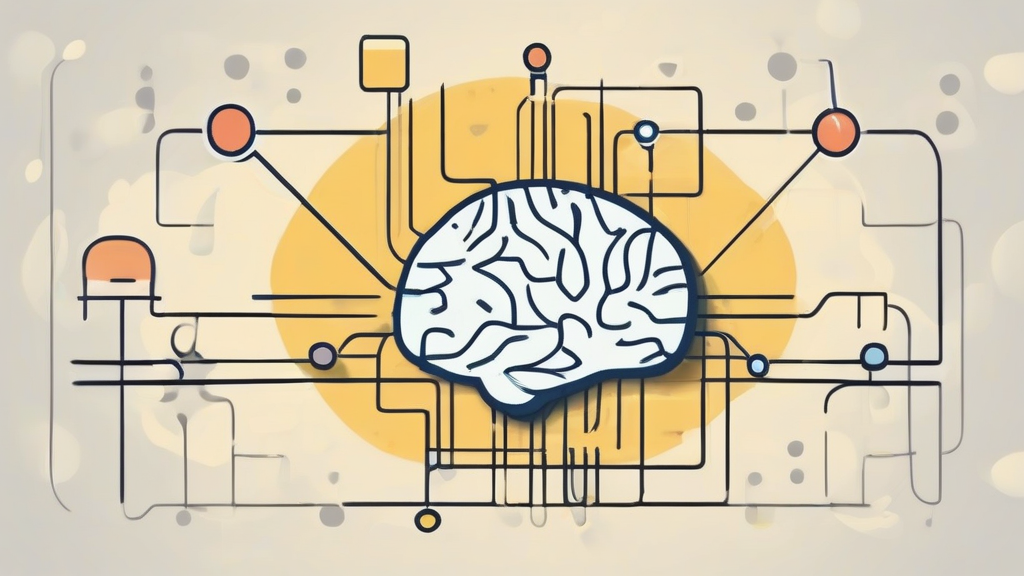
Ever found yourself staring at a dazzling piece of AI-generated art, a perfectly crafted AI-written email, or even a deepfake video, and wondered, "How Does Generative AI Work?" It’s a question that pops into many minds, especially as these technologies become so prevalent in our daily lives. You're not alone in that curiosity!
For many, the world of artificial intelligence, especially its creative side, feels like pure magic or some incredibly complex science fiction. But I'm here to tell you it's not. At its heart, generative AI relies on something surprisingly elegant: neural networks. Think of them as the fundamental building blocks, the very 'brain' that allows AI to create, imagine, and even surprise us.
If you're an online business owner trying to leverage AI tools, a curious individual wanting to understand the tech shaping your future, or just someone looking for practical solutions in a fast-evolving digital landscape, then understanding neural networks is your crucial first step. It's less about becoming a coding wizard and more about grasping the core concepts. Ready to pull back the curtain?
Key Takeaways for the Curious Mind
- Neural Networks Mimic the Brain: They're computing systems inspired by biological brains, designed to recognize patterns and make decisions without explicit programming.
- Generative AI Creates New Things: Unlike AI that just analyzes or predicts, generative AI uses these networks to produce entirely novel content—text, images, audio, you name it.
- It's All About Learning from Data: Neural networks learn by processing vast amounts of information, finding connections, and then using that learned understanding to generate new, similar outputs.
What Exactly Are Neural Networks, Anyway?
Let's start with the basics. Imagine your own brain for a moment. It's a vast, intricate network of billions of neurons, constantly firing and connecting, allowing you to think, learn, and create. Well, an artificial neural network (often just called a neural network) is a computational model inspired by that biological wonder.
It's not a direct copy, mind you, but it takes cues from how our brains process information. Instead of explicit, step-by-step instructions that a traditional computer program follows, neural networks learn from examples. They identify patterns, make predictions, and adapt over time, much like we do.
This ability to learn from data is what makes them so powerful. They can spot trends, classify information, and, most importantly for our discussion, generate new content that looks or sounds remarkably human-like. Pretty neat, right?
The Brain Behind Generative AI: How Does Generative AI Work?
So, we know neural networks are good at learning. But how does that learning translate into creating something entirely new? This is where the magic of generative AI really comes into play, and it’s a question many ask when they see its outputs.
Think about a child learning to draw. Initially, they might just scribble. But over time, by observing countless drawings, pictures, and real-world objects, their brain starts to form internal representations of what a "cat" looks like, or how to draw a "house." They learn the patterns, the features, the compositions.
Generative AI works in a similar fashion. It's trained on enormous datasets—millions of images, billions of words, hours of audio. During this training, the neural network doesn't just memorize; it builds a complex internal model of the data's underlying structure and patterns. It learns the "rules" of what makes a cat a cat, or a coherent sentence a coherent sentence.
Once it has this deep understanding, it can then use that learned knowledge to produce entirely new examples that adhere to those same rules and patterns. It’s not copying; it's synthesizing. It's creating something novel based on its comprehensive understanding of what it has seen before. This ability to generate new, realistic data is precisely how generative AI works.
Building Blocks: Neurons, Layers, and Connections
Let's peel back another layer and look at the fundamental components that make up these digital brains. It’s not as intimidating as it sounds, I promise.
The Artificial Neuron: A Simple Switch
At the very core of a neural network is the artificial neuron, often called a "node" or "perceptron." Don't let the fancy name scare you. Think of it as a tiny decision-maker, a simple processing unit.
Each neuron receives inputs, which are essentially pieces of data or signals from other neurons. It then processes these inputs, performs a simple calculation, and if the result is strong enough, it "fires" or activates, sending its own output to other neurons down the line. It's a bit like a light switch, but with a dimmer control.
Layers: From Input to Output
These individual neurons aren't just floating around randomly. They're organized into layers, forming a structured pathway for information. Typically, you'll see three main types of layers in a basic neural network:
- Input Layer: This is where the raw data enters the network. If you're feeding an image, each pixel might be an input. If it's text, each word or character could be an input.
- Hidden Layers: These are the workhorses. Between the input and output layers, there can be one or many hidden layers. Here, the neurons perform complex computations, extracting features and patterns from the input data. The more complex the problem, often the more hidden layers (and neurons within them) are needed. This is where "deep learning" gets its "deep" – from having many hidden layers.
- Output Layer: This is where the network presents its final result. For a generative AI, this might be the generated text, the pixels of a new image, or the sound waves of a new audio clip.
Information flows from the input layer, through the hidden layers, and finally to the output layer. Each layer is building on the computations of the previous one, gradually transforming the raw input into a meaningful output.
Weights, Biases, and Activation Functions
Now, how do these neurons know what to do? It comes down to three key elements:
- Weights: Each connection between neurons has an associated "weight." Think of a weight as a measure of importance. A strong weight means that the input from that connection has a significant impact on the receiving neuron. These weights are what the network "learns" during training.
- Biases: A bias is like a special constant added to the input of a neuron. It allows the neuron to activate even if all its inputs are zero, or conversely, makes it harder to activate. It's a way to fine-tune the neuron's sensitivity.
- Activation Functions: After a neuron sums up its weighted inputs and adds its bias, it passes this sum through an activation function. This function decides whether the neuron should "fire" and what signal to pass on. It introduces non-linearity, which is crucial for the network to learn complex patterns. Without activation functions, a neural network would just be a series of linear equations, incapable of understanding anything truly interesting.
These three components — weights, biases, and activation functions — are the levers and dials that the neural network adjusts as it learns. They are the parameters that define its "knowledge."
Training a Neural Network: Learning from Data
Alright, we've got the components. Now, how do we get these networks to actually learn and then generate something useful? This is the core of the whole operation.
The Learning Process: Trial and Error
Training a neural network is an iterative process, much like how a child learns. You show it an example, it tries to produce an output, you tell it how wrong it was, and it adjusts itself. This happens millions, even billions, of times.
Let's say you're training a network to recognize cats. You feed it thousands of images labeled "cat" and "not cat." For each image, the network makes a guess. Initially, its guesses will be terrible, like a toddler identifying a dog as a cat.
The network then compares its guess to the correct answer (the label). The difference between its guess and the correct answer is called the "error" or "loss." This error is the crucial feedback mechanism.
Backpropagation: Adjusting the Brain
Once the error is calculated, the network uses a clever algorithm called backpropagation. This is where the "learning" really happens. Backpropagation essentially works backward through the network, from the output layer to the input layer.
It figures out how much each weight and bias contributed to the overall error. Then, it subtly adjusts those weights and biases to reduce the error in future predictions. Think of it like tuning a guitar: you pluck a string, hear if it's off-key, and then adjust the tuning peg slightly until it sounds right.
This process of forward pass (making a prediction) and backward pass (adjusting parameters based on error) is repeated over and over again with vast amounts of data. Gradually, the network's weights and biases converge to a state where it can accurately identify patterns, and for generative AI, create new data that matches the learned distribution.
A Simple Analogy for Training
Imagine you're teaching a robot to make perfect pancakes. You give it ingredients (inputs), it tries to mix and cook (hidden layers), and produces a pancake (output). If the pancake is burnt or raw (error), you tell it what went wrong. The robot then adjusts its mixing speed, cooking time, and heat (weights and biases) to make a better pancake next time. Repeat this thousands of times, and eventually, you'll have a master pancake chef!
Different Flavors of Neural Networks
While the core principles remain, neural networks come in many architectures, each suited for different tasks. Generative AI often leverages some of the more advanced types.
Feedforward Networks: The Basics
These are the simplest types, where information flows in one direction, from input to output, without loops or cycles. They're great for classification tasks, like identifying objects in an image or predicting house prices. They form the foundation for many more complex architectures.
Convolutional Neural Networks (CNNs): Seeing the World
If you've ever seen AI identifying faces or objects in photos, you've likely witnessed a CNN at work. These networks are specifically designed to process grid-like data, such as images. They use "convolutional layers" to automatically detect features like edges, textures, and shapes, making them incredibly effective for computer vision tasks.
Recurrent Neural Networks (RNNs): Remembering Sequences
What about data that has a sequence, like text or speech? That's where RNNs shine. Unlike feedforward networks, RNNs have loops that allow information to persist from one step to the next. This "memory" makes them ideal for understanding context in sentences, predicting the next word, or translating languages. However, they can struggle with very long sequences.
Transformers: The New Kid on the Block (and Generative AI's Best Friend)
This is where things get really exciting for generative AI! Transformers are a relatively newer architecture that have taken the AI world by storm. They overcome many limitations of RNNs, especially when dealing with long-range dependencies in sequential data.
The key innovation in transformers is something called "attention mechanisms." Instead of processing sequences word by word, transformers can weigh the importance of different parts of the input sequence simultaneously. This allows them to understand context across very long texts or complex relationships in data much more effectively.
Large Language Models (LLMs) like ChatGPT, which are prime examples of generative AI, are built on transformer architectures. They are incredibly powerful at understanding, summarizing, and generating human-like text, which is why you see so much incredible output from them today.
Generative AI in Action: Creating the New
With an understanding of neural networks and how they learn, we can now truly appreciate what generative AI accomplishes. It’s not just about predicting the next word; it's about predicting an entire, coherent, and novel sequence of words or pixels.
Consider AI art generators. They're trained on millions of images, learning intricate details about styles, colors, objects, and compositions. When you give them a prompt, they don't just find a similar image from their training data. Instead, they use their learned understanding to generate a brand new image, pixel by pixel, that fits your description and often exhibits a unique artistic flair.
Similarly, when a large language model writes an essay or a poem, it's not pulling pre-written sentences from a database. It's generating new text, word by word, ensuring grammatical correctness, semantic coherence, and often, a surprising degree of creativity, all based on the patterns it absorbed during its extensive training.
This capacity to synthesize and innovate is why generative AI feels so transformative. It moves beyond mere analysis to genuine creation, opening up entirely new possibilities across industries.
Why Should You Care About This?
You might be thinking, "Okay, this is interesting, but why does it matter to me, an online business owner or someone just trying to get by?" Well, understanding the basics of neural networks and how generative AI works isn't just for data scientists anymore.
For one, it helps you critically evaluate the AI tools you might be using or considering. Knowing that these systems learn from data means you'll ask better questions about that data: Is it biased? Is it up-to-date? What are its limitations?
Secondly, it empowers you to use generative AI more effectively. If you grasp that it's pattern-matching and synthesis, you'll craft better prompts, understand why certain outputs appear, and troubleshoot more intelligently. You’ll stop seeing it as a magic box and start treating it as a powerful, albeit specialized, tool.
Finally, it positions you to innovate. As these technologies become more accessible, understanding their underlying mechanics will give you a significant edge in identifying new applications, creating unique content strategies, or even developing novel business models. It's about being prepared for the future, not just reacting to it.
So, next time you see an AI-generated image or read an AI-drafted email, you’ll have a clearer picture of the sophisticated, brain-inspired network humming beneath the surface, learning, adapting, and creating. It’s not magic; it’s just really clever engineering.
Frequently Asked Questions (FAQ)
What is the main difference between traditional AI and generative AI?
Traditional AI often focuses on analysis, prediction, or classification—like identifying spam emails or recommending products. Generative AI, on the other hand, is designed to create new, original content, such as text, images, or audio, that didn't exist before.
Do neural networks "think" like humans?
While neural networks are inspired by the human brain, they don't "think" or possess consciousness in the way humans do. They are complex mathematical models that excel at pattern recognition and data synthesis. Their "intelligence" is a specialized form, not general human-like cognition.
Is it hard to build and train your own neural network?
Building and training complex neural networks from scratch can be challenging, requiring programming skills and a deep understanding of machine learning. However, many user-friendly tools and platforms are emerging that allow individuals and businesses to leverage pre-trained models or customize existing ones without extensive coding knowledge.
As artificial intelligence continues to redefine what's possible in the digital space, staying informed and adaptable is your greatest advantage. Mastering AI Tech is deeply committed to evolving alongside these technological breakthroughs, ensuring you always have access to the best resources, technical guidance, and clear industry insights. Take a moment to bookmark this site, explore our upcoming foundational guides, and get ready to enhance your digital skills. The future of technology is already here, and together, we will master it. Leave a comment if you found this informative article helpful. THANK YOU
Post a Comment for "Neural Networks for Dummies: Your First Step to Understanding Generative AI's Brain"