The Convergence: How Machine Learning and Deep Learning Are Evolving Together
Welcome to the official launch of Mastering AI Tech, my primary global platform for providing information about AI and tech. You've come to the right place. Please read my article.
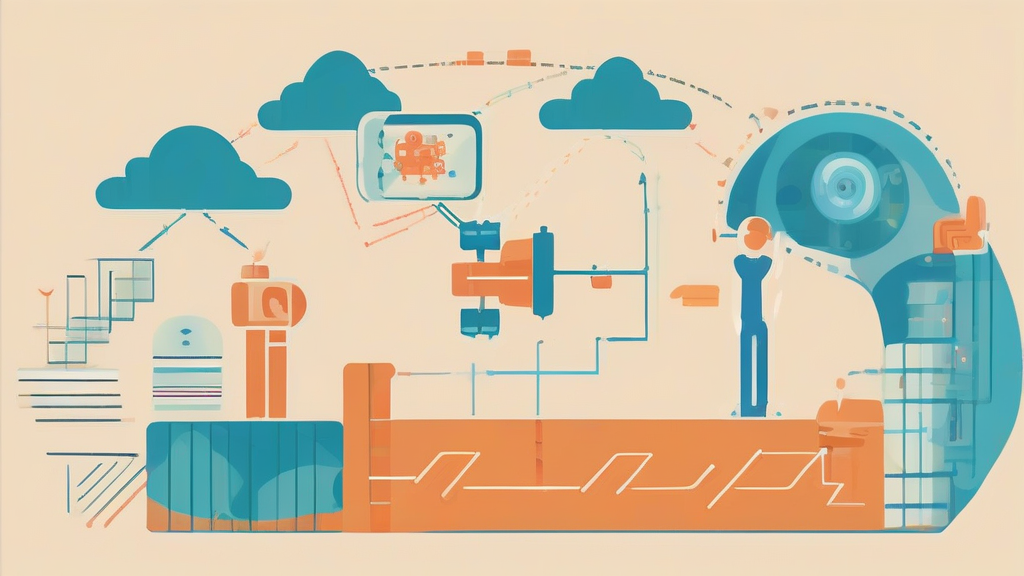
The Convergence: How Machine Learning and Deep Learning Are Evolving Together
I remember when artificial intelligence felt like something out of a science fiction novel, a distant dream for academics and researchers. Now, it's interwoven into the fabric of our daily lives, often without us even realizing it. From personalized recommendations on streaming services to the voice assistants in our phones, AI is everywhere. But when we talk about its core components, specifically Machine Learning vs. Deep Learning: What is the Exact Difference? This question comes up a lot, and for good reason. It’s a nuanced relationship, one that’s often misunderstood, yet it's crucial for anyone trying to grasp the future of technology. I’ve spent years watching these fields grow, and what's clear is that they aren't just distinct entities; they're increasingly working hand-in-hand, shaping what’s possible.Key Takeaways:
- Deep Learning is a specialized subset of Machine Learning: Think of it as a powerful, advanced technique within the broader ML family, not a separate technology.
- The core difference lies in feature engineering: Traditional ML often requires human-guided feature extraction, while Deep Learning automatically learns features directly from raw data.
- They are converging, not competing: Modern AI solutions frequently combine elements of both, leveraging the strengths of traditional ML for structured data and Deep Learning for complex, unstructured data like images and text.
Understanding the Foundations: What is Machine Learning?
Before we can even begin to tease apart the subtleties, we need a solid grasp of the basics. So, what exactly is machine learning? At its heart, machine learning is about teaching computers to learn from data without being explicitly programmed for every single task. Instead of writing a rule for every possible scenario, we feed the machine data, and it figures out the rules itself. It’s a bit like teaching a child by example rather than giving them a precise instruction manual for every single action they might encounter in life. My first real encounter with machine learning wasn’t in some high-tech lab, but rather in trying to predict customer churn for a small online business. We had heaps of historical data – purchase history, website interactions, support tickets – and we needed a way to identify at-risk customers before they left. That's where machine learning algorithms came into play. We weren't telling the computer, "If a customer hasn't logged in for 30 days AND hasn't purchased in 60 days, they're at risk." Instead, we fed it thousands of examples of customers who churned and customers who stayed, and the algorithm learned the patterns. There are generally three main types of machine learning, each suited for different kinds of problems. First, there's supervised learning, which is probably the most common. Here, the algorithm learns from labeled data – data where the "correct" answer is already known. Think of it like a student learning with an answer key. We give it input data and the corresponding output, and it learns to map one to the other. Predicting house prices based on features like size and location, or classifying emails as spam or not spam, are classic examples. Then we have unsupervised learning. This type deals with unlabeled data, meaning the algorithm has to find patterns or structures within the data all on its own. It's like giving a child a pile of toys and asking them to sort them into groups without telling them what the groups should be. Clustering similar customers together for marketing segmentation or finding anomalies in network traffic are common applications. It's a powerful way to uncover hidden insights when you don't know what you're looking for. Finally, there's reinforcement learning. This one is perhaps the most intriguing, as it involves an agent learning to make decisions by performing actions in an environment and receiving rewards or penalties. It's the trial-and-error approach, much like how we learn to ride a bike. AlphaGo, the program that beat the world champion Go player, famously used reinforcement learning. It's fantastic for tasks like game playing, robotics, and autonomous systems where the optimal path isn't immediately obvious. Traditional machine learning algorithms rely heavily on what we call "feature engineering." This is where humans, with their domain expertise, meticulously select and transform raw data into features that the algorithm can understand and learn from. For instance, if you're trying to predict house prices, you might decide that "number of bedrooms," "square footage," and "zip code" are important features. You'd then spend time cleaning and preparing this data so your chosen algorithm, be it a linear regression model or a decision tree, can make sense of it. It’s a critical, often time-consuming step that requires a lot of human intuition and effort.Deep Learning: A Specialized Branch
Now, let's talk about deep learning. When I first started hearing the term "deep learning" a decade or so ago, it felt like a significant leap, almost a new paradigm in AI. It wasn't just a fancy new buzzword; it represented a fundamental shift in how we approached complex problems, particularly those involving unstructured data. Deep learning isn't an entirely separate field from machine learning; rather, it’s a specific, powerful subset of machine learning that uses multi-layered artificial neural networks to learn and make decisions. Imagine the human brain, with its intricate web of interconnected neurons. Deep learning draws its inspiration from this biological structure. These artificial neural networks consist of layers of interconnected "nodes" or "neurons," each performing a simple computation. When you have many of these layers stacked on top of each other – a "deep" architecture – that's where the magic, and the name, comes from. Each layer learns to recognize features at different levels of abstraction. The first layer might detect edges in an image, the next might combine edges to form shapes, and subsequent layers might recognize more complex patterns like eyes or ears, eventually identifying a face. One of the most compelling aspects of deep learning is its ability to perform automatic feature extraction. Remember how I mentioned that traditional machine learning requires extensive human feature engineering? Deep learning largely bypasses this. Instead of a human telling the system what features are important (e.g., "this pixel combination forms an edge"), the deep learning model learns these features directly from the raw data itself. You feed it millions of images, and it figures out what patterns and features are relevant for distinguishing between, say, a cat and a dog. This capability is a game-changer, especially for incredibly complex datasets like images, audio, and raw text. This automatic feature learning is why deep learning has seen such groundbreaking success in areas like computer vision, natural language processing, and speech recognition. Tasks that were incredibly difficult or even impossible for traditional ML approaches suddenly became tractable. Think about how far facial recognition has come, or how well voice assistants understand complex commands, or how accurately machine translation works now. These advancements are largely thanks to deep learning. However, this power comes with its own set of demands. Deep learning models typically require vast amounts of data to train effectively. They also demand significant computational resources, often needing specialized hardware like GPUs (Graphics Processing Units) to handle the intense parallel processing required for training these large neural networks. Training a state-of-the-art deep learning model can take days or even weeks on powerful hardware, a stark contrast to some traditional ML models that might train in minutes on a standard CPU.Machine Learning vs. Deep Learning: What is the Exact Difference?
So, let's get down to the core question: Machine Learning vs. Deep Learning: What is the Exact Difference? It's more than just semantics; it's about the fundamental approach to problem-solving and the underlying architecture. While deep learning is a subset of machine learning, their practical differences are quite pronounced. Here’s how I usually break it down for people: Feature Engineering: This is probably the biggest differentiator. In traditional ML, you, the human expert, hand-craft the features from the raw data. If you're building a spam detector, you might decide that "presence of specific keywords," "sender's domain," or "email length" are important features. You extract these, and the ML algorithm learns from them. Deep learning, on the other hand, learns* the features itself. You just feed it the raw email text, and it figures out what patterns of words, characters, or structures indicate spam. This makes it incredibly powerful for complex, unstructured data. * Data Dependency: Deep learning models are data hungry. They typically perform exceptionally well when given massive amounts of data (think millions of data points). With smaller datasets, traditional machine learning algorithms can often outperform deep learning because they don't have as many parameters to learn, reducing the risk of overfitting. If you only have a few thousand examples, a well-tuned random forest might be your best bet. * Hardware: Deep learning demands significant computational power. Training deep neural networks involves billions of calculations, which are best handled by GPUs or TPUs (Tensor Processing Units) that are designed for parallel processing. Traditional ML algorithms, while they can also benefit from better hardware, generally run efficiently on standard CPUs. * Time to Train: Because of their complexity and data requirements, deep learning models can take hours, days, or even weeks to train. Traditional ML models, being simpler, often train in minutes or hours. This can be a crucial factor in development cycles, especially for iterative model building. Interpretability: This is a tricky one. Many traditional ML models, like decision trees or linear regression, are relatively transparent. You can often understand why* they made a particular prediction. Deep learning models, especially very deep ones, are often referred to as "black boxes." It's hard to interpret the exact reasoning behind their decisions, which can be a concern in critical applications like healthcare or finance. To give you an analogy, think of machine learning as the entire field of vehicle engineering. It encompasses everything from bicycles to race cars. Deep learning would then be akin to the specific branch of engineering focused on designing and building high-performance jet engines. A jet engine is undoubtedly a powerful, advanced type of engine, but it's still fundamentally an engine, and thus, part of vehicle engineering. You wouldn't use a jet engine for a bicycle, just as you wouldn't necessarily use deep learning for a simple, structured dataset problem.Deep learning is a subset of machine learning. It excels with large, unstructured datasets, automatically extracts features, and requires substantial computational resources. Traditional machine learning, conversely, often relies on human-engineered features, can perform well with smaller datasets, and is generally more interpretable.
The Evolution and Convergence: More Than Just a Distinction
The lines between machine learning and deep learning are not static; they are constantly blurring, evolving, and converging. What we're seeing now isn't a competition, but rather a powerful synergy. Deep learning, with its incredible power for complex feature extraction, is increasingly being integrated into broader machine learning pipelines. Consider a practical scenario. Perhaps you have a dataset that includes both structured numerical data (like customer demographics) and unstructured text data (like customer reviews). Instead of trying to force a traditional ML algorithm to handle the text after laborious manual feature engineering, or trying to make a deep learning model parse the numerical data perfectly, you might use a hybrid approach. A deep learning model could process the text, extracting rich, abstract features, which are then fed alongside the numerical data into a traditional machine learning algorithm for final prediction. This way, you leverage the strengths of both. We're also seeing advancements in areas like "transfer learning," where a deep learning model, pre-trained on a massive dataset for a general task (like recognizing objects in images), can be fine-tuned with a smaller, specific dataset for a related task (like identifying specific types of defects in manufacturing). This makes deep learning more accessible and efficient, reducing the need for enormous custom datasets and training times. It's like a student who has already learned general physics and now only needs to learn the specifics of fluid dynamics, rather than starting physics from scratch. Furthermore, research into areas like "explainable AI" (XAI) is attempting to make deep learning models less of a black box, bringing some of the interpretability benefits of traditional ML to deep architectures. This ongoing work is crucial for building trust and ensuring ethical deployment of AI systems, especially in sensitive domains.Real-World Applications: Where We See Them Together
It’s truly fascinating to observe how machine learning and deep learning applications permeate so many aspects of our lives. They're not just theoretical constructs; they're the engines behind practical solutions we interact with every single day. In computer vision, deep learning absolutely dominates. Tasks like facial recognition, object detection in self-driving cars, and medical image analysis (identifying tumors in X-rays, for example) rely heavily on convolutional neural networks (CNNs), a specialized type of deep learning model. These models can automatically learn to identify incredibly complex visual patterns that would be impossible for humans to hand-engineer. Natural Language Processing (NLP) has also been transformed. Think about Google Translate, sentiment analysis, chatbots, or predictive text on your phone. Recurrent Neural Networks (RNNs) and, more recently, Transformer models (another deep learning architecture) are at the forefront of these advancements. They understand context, nuance, and even generate human-like text, something that was unimaginable with older, rule-based or traditional ML approaches. In healthcare, both ML and DL play vital roles. Traditional machine learning algorithms are often used for predictive analytics on structured patient data, like predicting disease risk based on demographics and medical history. Deep learning, meanwhile, excels at analyzing unstructured data such as MRI scans, pathology slides, or even genetic sequences to aid in diagnosis and drug discovery. The convergence here means a more holistic approach to patient care. For online business owners, the impact is profound. Recommendation engines (think Netflix or Amazon) often combine collaborative filtering (a traditional ML technique) with deep learning to understand subtle user preferences and item characteristics. Fraud detection systems might use traditional ML to flag suspicious transactions based on known patterns, while deep learning could be employed to detect novel, sophisticated fraud schemes by identifying unusual anomalies in vast datasets. Personalized advertising, inventory management, customer service automation – all are areas where these technologies are making a tangible difference to the bottom line. Even in something as seemingly simple as spam detection, you might find a blend. Simple keyword filtering (a very basic ML concept) combined with a deep learning model that understands the semantic meaning and intent of an email can create a far more robust defense against unwanted messages. The sheer volume and complexity of data generated in our digital world necessitate these sophisticated, often hybrid, approaches.Choosing the Right Tool: When to Use What
Given their distinct characteristics and the areas where they excel, how do you decide whether to use traditional machine learning, deep learning, or a combination? This is a question I'm often asked, and it really boils down to a few key considerations. There’s no one-size-fits-all answer, unfortunately. First, consider your data. If you have a relatively small dataset (hundreds or thousands of examples) and it's mostly structured (tables of numbers and categories), traditional ML algorithms like decision trees, random forests, or support vector machines are often your best bet. They are less prone to overfitting with limited data and can be quicker to train. However, if you're drowning in millions or billions of unstructured data points – images, videos, audio recordings, or raw text – then deep learning is likely the more appropriate and powerful choice. Its ability to automatically extract features from raw, complex data is unparalleled in these scenarios. Next, think about your computational resources. Do you have access to powerful GPUs or cloud computing services? If not, training a deep learning model might be impractical. Traditional ML models generally have lower hardware requirements, making them more accessible for those with standard computing setups. Problem complexity also plays a huge role. For straightforward tasks with clear, definable features, traditional ML can be highly effective and often more interpretable. But for highly complex tasks like understanding human speech, recognizing intricate visual patterns, or generating creative content, deep learning truly shines. These are problems where the "features" are so abstract that a human couldn't possibly define them all. Finally, consider interpretability. If it's absolutely critical to understand why your model made a particular decision – perhaps for regulatory compliance or in high-stakes environments like medical diagnosis – then a more transparent traditional ML model might be preferred. While explainable AI is making strides in deep learning, it's still an active research area, and full transparency remains a challenge. My advice for business owners? Don't get caught up in the hype of always needing the "deepest" model. Start with the simplest approach that solves your problem effectively. Often, a well-tuned traditional machine learning model can deliver immense value. If that hits a wall, or if your problem inherently involves vast amounts of unstructured data, then begin exploring deep learning. Many successful applications today use a blend, where deep learning handles the heavy lifting of feature extraction from complex data, and a simpler ML model makes the final decision based on those extracted features. It's about smart engineering, not just chasing the latest trend.The Future is Integrated: My Vision for AI
Looking ahead, I don't see machine learning and deep learning diverging. Quite the opposite. Their paths are converging, weaving together into more sophisticated and robust AI systems. We're moving towards an era where the distinction might become less about "ML vs. DL" and more about "which ML techniques, including deep learning, are best suited for different parts of this complex problem." I envision a future where AI development becomes even more accessible. Tools and frameworks will continue to evolve, making it easier for developers and business owners to implement these powerful techniques without needing a Ph.D. in theoretical computer science. This democratized access will fuel innovation across countless industries, leading to solutions we can barely imagine today. Of course, with great power comes great responsibility. As these technologies become more integrated and impactful, the discussions around ethical AI, bias in algorithms, and data privacy will only intensify. It's a critical part of this evolving landscape that we, as practitioners and observers, must actively engage with. Our goal isn't just to build smarter machines, but to build responsible, beneficial ones. The convergence isn't just technological; it's also a convergence of technical capability with societal impact and ethical consideration. In the end, whether we call it machine learning or deep learning, the goal remains the same: to empower machines to learn from data, adapt, and solve problems that were once beyond our reach. The journey is ongoing, and watching these fields evolve and merge has been, and continues to be, an incredibly exciting experience.Frequently Asked Questions (FAQ)
Is Deep Learning better than Machine Learning?
No, deep learning is not inherently "better" than machine learning; it is a specialized subset. Deep learning excels in specific areas, particularly with large, unstructured datasets like images and text, due to its ability to automatically learn complex features. For smaller, structured datasets, or when interpretability is crucial, traditional machine learning algorithms can often be more efficient and effective. The best approach depends on the problem and available resources.Can Machine Learning exist without Deep Learning?
Absolutely. Machine learning existed for decades before deep learning gained prominence. Many traditional machine learning algorithms, such as linear regression, decision trees, and support vector machines, are powerful tools that solve a wide range of problems without employing deep neural networks. These methods are still widely used and highly effective in various applications, especially with structured data and limited computational resources.What are some common applications where Machine Learning and Deep Learning are used together?
Hybrid approaches are increasingly common. For instance, in recommendation systems, traditional ML might identify broad user preferences, while deep learning refines suggestions by analyzing nuanced item features or user reviews. In fraud detection, ML could flag suspicious transactions based on known patterns, and deep learning might detect novel fraud types by identifying subtle anomalies. Autonomous vehicles use deep learning for perception (image recognition) and traditional ML for decision-making and control.As artificial intelligence continues to redefine what's possible in the digital space, staying informed and adaptable is your greatest advantage. Mastering AI Tech is deeply committed to evolving alongside these technological breakthroughs, ensuring you always have access to the best resources, technical guidance, and clear industry insights. Take a moment to bookmark this site, explore our upcoming foundational guides, and get ready to enhance your digital skills. The future of technology is already here, and together, we will master it. Leave a comment if you found this informative article helpful. THANK YOU
Post a Comment for "The Convergence: How Machine Learning and Deep Learning Are Evolving Together"