Computational Power Explained: GPU vs. CPU for Machine Learning and Deep Learning Tasks
Welcome to the official launch of Mastering AI Tech, my primary global platform for providing information about AI and tech. You've come to the right place. Please read my article.
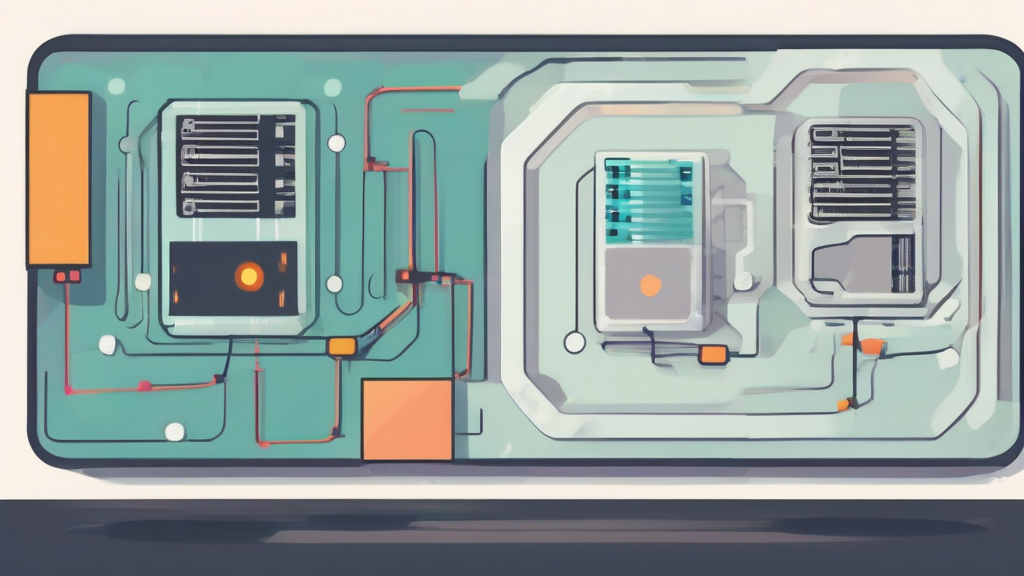
Computational Power Explained: GPU vs. CPU for Machine Learning and Deep Learning Tasks
When we talk about the incredible advancements in artificial intelligence, especially the nuanced differences between Machine Learning vs. Deep Learning: What is the Exact Difference?, it's impossible to ignore the underlying hardware that makes it all possible. As someone who's spent a fair bit of time wrestling with complex models and optimizing compute resources, I've come to appreciate the distinct roles of the Central Processing Unit (CPU) and the Graphics Processing Unit (GPU). It's not just about having power, but having the right kind of power for the job. Understanding this distinction is crucial for anyone looking to build, train, or even just comprehend modern AI systems, whether you're an aspiring data scientist or an online business owner trying to leverage AI solutions. For a long time, the CPU was king, handling every computational task imaginable. But as AI workloads grew, particularly with the rise of deep learning, a new champion emerged from an unexpected corner: the GPU. This shift wasn't accidental; it's rooted in fundamental architectural differences that make one better suited for certain types of problems than the other. Let's dig into why this matters and how these two titans of computation stack up.Key Takeaways
- CPUs excel at sequential tasks and general-purpose computing: They have fewer, more powerful cores designed for diverse operations and managing system resources efficiently.
- GPUs are specialized for parallel processing: With thousands of smaller cores, they can perform many simple calculations simultaneously, making them ideal for the matrix multiplications central to deep learning.
- The choice between GPU and CPU hinges on your specific AI task: Traditional machine learning often runs fine on CPUs, but deep learning models demand the parallel processing capabilities of GPUs for efficient training.
Understanding the Core Process: Computational Power in AI
Before we pit GPUs against CPUs, let's briefly consider what kind of "computational power" machine learning and deep learning models actually require. At their heart, these models are all about crunching numbers. They involve vast amounts of data, intricate algorithms, and iterative processes of calculation, comparison, and adjustment. Think about training a neural network. It's an endless loop of multiplying matrices, adding vectors, and applying activation functions, repeated millions or even billions of times. This isn't just a lot of work; it's a very specific kind of work. It’s highly parallelizable, meaning many of these calculations can happen at the same time without waiting for others to finish. This fundamental characteristic is what truly differentiates the optimal hardware choice.The Central Processing Unit (CPU): The Brain of the Operation
The Central Processing Unit (CPU) is, without a doubt, the workhorse of any computer. It's the general-purpose processor designed to handle a wide variety of tasks, from running your operating system to browsing the web, editing documents, and executing complex software. If your computer were a human body, the CPU would be its brain, meticulously coordinating every function.How CPUs Handle Data and Instructions
CPUs typically feature a small number of very powerful cores, often ranging from 4 to 64 in modern consumer and server chips. Each core is designed to execute instructions sequentially, one after the other, but it does so incredibly fast. They have large caches, sophisticated branch prediction logic, and complex control units that help them manage diverse workloads with maximum efficiency. When a CPU encounters a task, it processes it step-by-step. It's like a highly skilled manager who can handle many different types of problems, but prefers to tackle them one at a time, ensuring each is perfectly resolved before moving on. This design makes CPUs exceptional at tasks that require complex decision-making, intricate logic, and strict sequential execution.CPU Strengths and Limitations for Machine Learning
For many traditional machine learning algorithms, CPUs are perfectly adequate, even preferable. Algorithms like linear regression, decision trees, support vector machines, and even some simpler neural networks can be trained and run efficiently on a CPU. They don't always demand the sheer parallel throughput that deep learning does. Here's where CPUs shine for AI: * Sequential Tasks: Many data preprocessing steps, feature engineering, and model deployment (inference for smaller models) are inherently sequential. * Flexibility: CPUs can handle a wide array of data types and operations, making them versatile for the diverse computational needs of an entire AI project lifecycle, not just model training. * Cost-Effectiveness (for some tasks): For tasks that don't heavily rely on parallel processing, a high-end CPU might be more cost-effective than investing in a dedicated GPU setup. However, CPUs hit a wall when faced with the massive parallel demands of modern deep learning. Their limited number of cores means they can't perform thousands of calculations simultaneously, leading to significantly longer training times for large neural networks. You'd be waiting forever, honestly.The Graphics Processing Unit (GPU): The Parallel Powerhouse
Enter the Graphics Processing Unit (GPU). Originally designed to render graphics for video games, GPUs are built with a fundamentally different architecture than CPUs. Instead of a few powerful cores, they boast thousands of smaller, more specialized cores. This design is perfect for graphics rendering, which involves performing the same simple calculations on millions of pixels simultaneously.The Architectural Advantage of GPUs
Imagine a large team of workers. A CPU is like a small team of highly skilled generalists, each capable of doing any task, but only one at a time. A GPU, on the other hand, is like an enormous army of specialists, each only capable of doing one simple task, but doing it all at once. This massive parallelism is the GPU's superpower. Each of these smaller cores can execute simple arithmetic operations in parallel. This architecture is specifically optimized for tasks that can be broken down into many independent, identical calculations. For graphics, this means processing pixel data; for AI, it means matrix operations.Why GPUs Excel in Deep Learning and Neural Networks
The reason GPUs have become indispensable for deep learning is directly tied to the mathematical operations at the core of neural networks. Training a deep neural network involves an enormous number of matrix multiplications and additions. These operations are inherently parallel. Consider this: if you have two large matrices, multiplying them involves calculating many individual dot products, all of which can be computed simultaneously. A GPU can assign thousands of its cores to perform these dot products at the same time, dramatically speeding up the entire process. This isn't just a little faster; it's orders of magnitude faster than what a CPU could achieve. For instance, when you're training a convolutional neural network (CNN) to recognize images, each layer performs operations across the entire image. A GPU can process different parts of the image or different filters simultaneously, making the training of these computationally intensive models feasible within a reasonable timeframe. Without GPUs, deep learning, as we know it today, simply wouldn't exist."The fundamental difference isn't about raw speed in a single task, but the capacity for concurrent operations. CPUs are sprinters, optimized for single, powerful bursts. GPUs are marathon runners, built for sustained, massive parallel effort."
Machine Learning vs. Deep Learning: What is the Exact Difference? And Why Hardware Matters
Understanding the precise distinction between Machine Learning vs. Deep Learning: What is the Exact Difference? is absolutely vital when considering hardware. While often used interchangeably by the general public, these terms represent different subsets of AI with distinct computational demands. Machine learning is a broader field, encompassing various algorithms that learn from data without explicit programming. Deep learning is a specialized subset of machine learning that uses neural networks with many layers (hence "deep") to model complex patterns.Traditional Machine Learning and CPU Suitability
Traditional machine learning algorithms often involve statistical methods, decision trees, support vector machines (SVMs), and simpler clustering techniques. These models typically operate on structured, tabular data and are less computationally intensive during training compared to deep learning. For example, training a random forest model on a dataset of customer demographics to predict churn might involve iterating through many decision trees. While this can benefit from some parallelization, the core operations aren't the kind of massive matrix computations that deep neural networks demand. Therefore, a robust CPU, especially one with a good number of cores, can handle these tasks quite effectively. Many data scientists conduct their entire traditional ML workflow on CPU-only machines or cloud instances without issues.Deep Learning's Demands and GPU Dominance
Deep learning, on the other hand, is all about neural networks—architectures inspired by the human brain. These networks can have millions, even billions, of parameters and are trained on massive datasets (images, audio, video, text). The training process involves repeatedly feeding data through the network, calculating errors, and adjusting weights through a process called backpropagation. This backpropagation and forward pass involve continuous matrix multiplications. Each neuron's output is a weighted sum of its inputs, and these weights are updated iteratively. This is where the GPU's parallel processing capability becomes not just an advantage, but a necessity. Training a large language model or a sophisticated image recognition network on a CPU would take weeks, months, or even years, making it practically impossible. With a powerful GPU, these tasks can be completed in hours or days. The sheer scale of data and the complexity of the models in deep learning are what drive the demand for GPU acceleration.Beyond the Basics: Other Factors Influencing Performance
While the CPU vs. GPU debate is central, it's not the only factor in computational performance for AI. Several other elements play crucial roles in how quickly and efficiently your models train and run. It's a symphony of components working together, after all.Memory, Bandwidth, and Interconnects
Memory is critical. GPUs, especially those designed for AI, come with significant amounts of high-bandwidth memory (HBM or GDDR). This memory is located directly on the GPU chip and provides extremely fast access to data, which is essential for feeding the hungry processing cores. A powerful GPU with insufficient memory bandwidth would be bottlenecked, much like a super-fast car stuck in traffic. The interconnects—how the CPU communicates with the GPU, or how multiple GPUs communicate with each other—also matter immensely. Technologies like PCIe (Peripheral Component Interconnect Express) and NVIDIA's NVLink provide high-speed data transfer paths, minimizing latency and maximizing throughput between components. Without these fast lanes, even the most powerful processors would spend too much time waiting for data.Software Optimization and Frameworks
The hardware is only as good as the software that utilizes it. Modern AI frameworks like TensorFlow, PyTorch, and Keras are heavily optimized to leverage GPU acceleration. They provide high-level APIs that allow developers to build and train complex models without needing to write low-level GPU code. These frameworks abstract away much of the complexity, making it easier for practitioners to harness the power of GPUs. Furthermore, driver optimization and specialized libraries (like NVIDIA's CUDA and cuDNN) play a massive role. These software layers ensure that the AI frameworks can efficiently communicate with the GPU hardware, translating high-level operations into optimized GPU instructions. A poorly optimized driver or framework can negate much of the hardware advantage.Making the Right Choice: When to Use Which
So, when do you choose a CPU, and when do you absolutely need a GPU? It really boils down to the specific task at hand and your budget. * For General-Purpose Computing and Traditional ML: If you're primarily doing data preprocessing, running traditional machine learning algorithms (like scikit-learn models), or deploying smaller models for inference, a powerful CPU will likely suffice. It's also great for general development work and managing your overall system. * For Deep Learning Training and High-Performance Inference: If you're training large neural networks, working with image or video processing, natural language processing (NLP) with transformers, or need high-throughput inference for complex deep learning models, a GPU is non-negotiable. For serious deep learning, you'll want multiple GPUs or access to cloud-based GPU instances. * For Hybrid Workloads: Many real-world AI projects involve a mix. You might use a CPU for data loading and preprocessing, then offload the heavy model training to a GPU. This hybrid approach is common and often the most efficient way to work. My personal experience? Trying to train a moderately sized CNN on a CPU felt like watching paint dry. Switching to a GPU cut the training time from days to hours. It's truly a night and day difference when you hit those deep learning workloads.The Future of AI Hardware: What's Next?
The landscape of AI hardware is constantly evolving. While CPUs and GPUs remain dominant, we're seeing the rise of specialized AI accelerators like Tensor Processing Units (TPUs) from Google, and various Application-Specific Integrated Circuits (ASICs) designed explicitly for AI workloads. These chips aim to provide even greater efficiency and performance for specific AI tasks, often focusing on inference at the edge or massive-scale training in data centers. We're also seeing innovations in neuromorphic computing, which seeks to mimic the structure and function of the human brain more directly. While still largely experimental, these technologies promise a future where AI computation is even more energy-efficient and powerful. The core principles of parallel processing will likely remain, but the architectures will continue to diversify and specialize.Conclusion
The journey through the computational landscape of AI reveals a fascinating interplay between hardware architecture and algorithmic demands. While the CPU remains the versatile brain of our computers, the GPU has emerged as the indispensable muscle for the heavy lifting of deep learning. Understanding Machine Learning vs. Deep Learning: What is the Exact Difference? is not just an academic exercise; it directly informs your hardware choices, impacting everything from development speed to deployment costs. Ultimately, the choice between GPU and CPU isn't about one being inherently "better" than the other. It's about selecting the right tool for the job. For general computing and many traditional machine learning tasks, a robust CPU is your reliable friend. But when you venture into the complex, data-intensive world of deep learning, the parallel processing power of a GPU becomes your essential ally. So, assess your needs, consider your budget, and choose wisely to unlock the full potential of your AI endeavors.Frequently Asked Questions (FAQ)
Q1: Can I do deep learning without a GPU?
A1: Yes, you can run deep learning models on a CPU, but it will be significantly slower, especially for training large models or processing big datasets. For practical deep learning development and research, a GPU is highly recommended.Q2: How much RAM do I need for machine learning or deep learning?
A2: For traditional machine learning, 16GB of RAM is often sufficient. For deep learning, especially with large datasets or models, 32GB or more is preferable for the system RAM, and the GPU's dedicated VRAM (Video RAM) is even more critical, with 8GB, 12GB, or 24GB being common for modern tasks.Q3: Is it better to have more CPU cores or a higher clock speed for AI tasks?
A3: For traditional machine learning tasks that can benefit from parallel processing (e.g., ensemble methods), more CPU cores can be advantageous. For deep learning, the number of GPU cores and the GPU's memory bandwidth are far more critical than CPU core count or clock speed. The CPU mostly handles data preparation and coordination.As artificial intelligence continues to redefine what's possible in the digital space, staying informed and adaptable is your greatest advantage. Mastering AI Tech is deeply committed to evolving alongside these technological breakthroughs, ensuring you always have access to the best resources, technical guidance, and clear industry insights. Take a moment to bookmark this site, explore our upcoming foundational guides, and get ready to enhance your digital skills. The future of technology is already here, and together, we will master it. Leave a comment if you found this informative article helpful. THANK YOU
Post a Comment for "Computational Power Explained: GPU vs. CPU for Machine Learning and Deep Learning Tasks"