The Role of Neural Networks in Modern AI Algorithms
Welcome to the official launch of Mastering AI Tech, my primary global platform for providing information about AI and tech. You've come to the right place. Please read my article.
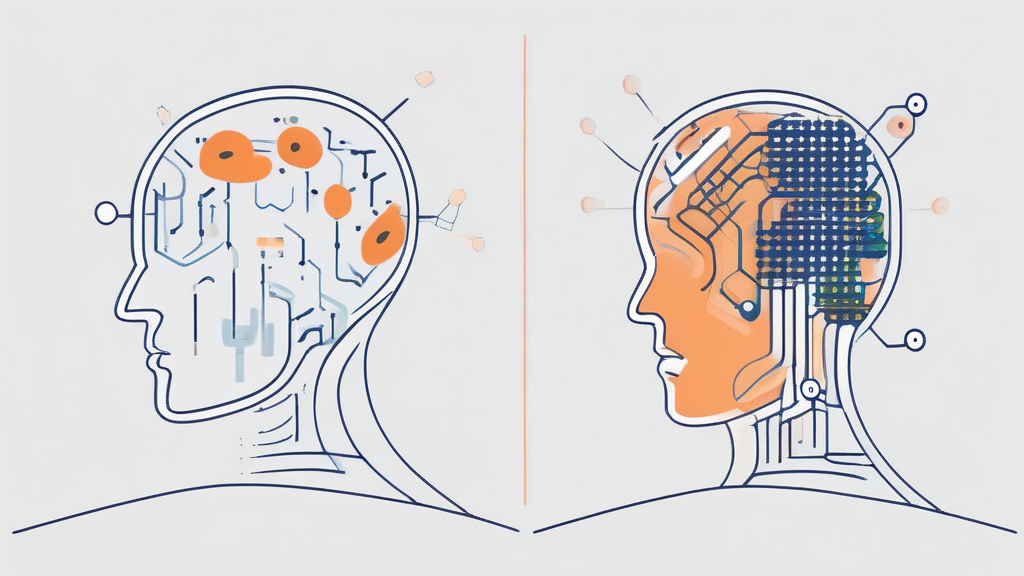
Understanding the role of neural networks in ai is non-negotiable if you want to grasp why machines suddenly started seeing, speaking, and predicting the future. Think of traditional software as a rigid recipe: you provide ingredients, and the code follows exact steps to bake the cake. Neural networks, conversely, are like a chef who has tasted a million cakes and taught themselves the science of flavor.
Key Insights
- Neural networks function as the connective tissue between raw data and actionable intelligence.
- They mimic the biological structure of the human brain to process information in layers.
- Pattern recognition is the primary engine driving modern advancements like Large Language Models and computer vision.
- Backpropagation is the secret sauce that allows these systems to learn from their own mistakes.
At their core, these networks are mathematical structures composed of interconnected nodes. Think of these nodes as tiny decision-makers. They pass signals to one another, adjusting their influence based on the error of the previous guess. This is machine learning in its most potent form.
When you feed an image into a network, the first layers might just detect edges or color gradients. As the data travels deeper, the network identifies shapes, then features like eyes or wheels, and finally, the concept of a "car." This hierarchical processing is exactly how human cognition operates.
Analyzing the Core Role of Neural Networks in AI
We often treat AI like magic, but it’s really just heavy-duty statistics happening at lightning speed. By leveraging deep learning architectures, developers can map non-linear relationships that traditional algorithms would miss entirely. This capacity to handle unstructured data—like audio files or messy spreadsheets—is what makes them indispensable.
| Feature | Traditional Algorithms | Neural Networks |
|---|---|---|
| Data Dependency | Requires structured, clean input | Thrives on unstructured, noisy data |
| Adaptability | Static; requires manual updates | Dynamic; learns from new data |
| Complexity | Limited by human-coded rules | Scales with computational power |
You might wonder if you need to be a mathematician to utilize these systems. You don't. Most business owners interact with these networks via APIs. You provide the data, and the network handles the heavy lifting of prediction, sentiment analysis, or anomaly detection. The barrier to entry has never been lower.
How Backpropagation Powers Modern Systems
The magic isn't just in the nodes; it’s in the feedback loop. During the training phase, the network makes a prediction and compares it to the ground truth. If it’s wrong, it tweaks the weight of every connection backward through the layers. It’s essentially a high-tech version of trial and error, repeated millions of times.
This process is how a chatbot learns the nuance of a polite email versus a hostile one. It doesn't "know" words; it knows the mathematical probability of which token should follow another. When you look at the landscape of modern business, these networks are the engines behind every recommendation you see on a shopping site.
Frequently Asked Questions
What is the primary objective of a neural network?
The main purpose is to identify complex, non-linear patterns within datasets that are too massive or chaotic for human analysis. By automating feature extraction, they allow AI to make accurate predictions or classifications in real-time.
What are the typical layers in a neural network?
Most architectures feature an input layer, one or more hidden layers where the computation occurs, and an output layer that delivers the final result. The depth of these hidden layers is what defines a "deep" neural network.
How many types of neural networks are there?
While there are many variations, the most common include Feedforward networks, Convolutional Neural Networks (CNNs) for images, Recurrent Neural Networks (RNNs) for time-series data, and Transformers, which currently dominate language processing tasks.
Stop viewing AI as a distant, technical threat and start seeing it as a sophisticated pattern-matching tool. The businesses that thrive in the coming decade will be the ones that effectively integrate these networks into their operational workflows. You don't need to build the brain; you just need to know how to feed it the right data.
As artificial intelligence continues to redefine what's possible in the digital space, staying informed and adaptable is your greatest advantage. Mastering AI Tech is deeply committed to evolving alongside these technological breakthroughs, ensuring you always have access to the best resources, technical guidance, and clear industry insights. Take a moment to bookmark this site, explore our upcoming foundational guides, and get ready to enhance your digital skills. The future of technology is already here, and together, we will master it. Leave a comment if you found this informative article helpful. THANK YOU
Post a Comment for "The Role of Neural Networks in Modern AI Algorithms"