Zero-Shot vs Few-Shot Prompting: Which Strategy Wins?
Welcome to the official launch of Mastering AI Tech, my primary global platform for providing information about AI and tech. You've come to the right place. Please read my article.
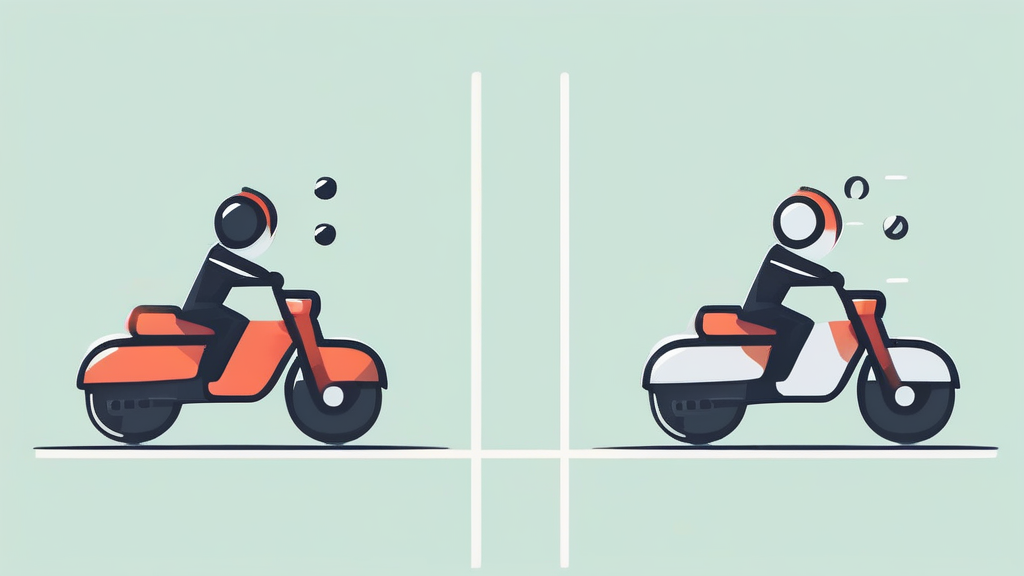
Deciding between zero-shot vs few-shot prompting can feel like choosing between a raw recruit and a seasoned veteran for a mission. You want efficiency, but you also need precision. Zero-shot is the equivalent of handing a stranger a map and asking them to find a buried treasure. They might get lucky, but they lack the specific context of the terrain. Few-shot, conversely, is showing them three photos of the landmark before they start digging.
Key Insights
- Zero-shot relies entirely on the model's large language model training.
- Few-shot reduces hallucination rates by providing task-specific patterns.
- Context window limits dictate how many examples you can realistically include.
- Zero-shot is superior for general-purpose tasks; few-shot wins for niche, proprietary formats.
Understanding the Mechanics of Zero-Shot Prompting
Zero-shot is the ultimate test of a model’s general intelligence. You provide a command, and the model leans on its vast repository of pre-training data to guess the output. It is fast. It is clean. Think of it as asking a chef to "make a salad" without specifying the ingredients. If the chef is world-class, they will choose fresh produce and a balanced dressing. If they are mediocre, they might toss in whatever is lying around. This approach works best when the task is straightforward, such as sentiment analysis or summarization. If you ask for a summary of an article, the model understands the structural intent of a summary inherently. It does not need to see previous examples to grasp the concept of "shortening text."Why Few-Shot Prompting Changes the Game
Few-shot prompting is the art of constraint. By feeding the AI 2-5 examples of the desired input-output pairing, you are essentially establishing the "style guide" for the response. You are lowering the barrier to entry for the model. If you are generating complex SQL queries or JSON-formatted data, zero-shot will fail you eventually. It will miss a comma. It will use the wrong key. Few-shot forces the model to mimic the structural integrity of your provided examples.Comparing Strategies: Zero-Shot vs Few-Shot Prompting
| Feature | Zero-Shot | Few-Shot |
|---|---|---|
| Setup Time | Instant | Moderate (requires crafting examples) |
| Accuracy | Variable | High (pattern-dependent) |
| Token Consumption | Minimal | High (examples add cost) |
| Best For | General queries, creative tasks | Technical tasks, strict formatting |
When to Pivot
Use zero-shot when you are exploring. If you are just testing whether a model understands a concept, don't waste time crafting examples. Start broad. If the output is 80% there but lacks a specific cadence, move to few-shot. Context windows are the primary bottleneck for few-shot. You cannot provide a thousand examples. You must choose the most representative ones. This is similar to machine learning where high-quality training data beats high-volume, low-quality data every time. Be surgical. If your few-shot prompt isn't working, don't add more examples. Change the examples to be more diverse or more representative of the failure points.How do I know which one is better for my task?
Start with zero-shot. If you get consistent, accurate results, stick with it to save on latency and costs. If you notice the model failing to adhere to your specific constraints or style, shift to few-shot.Does few-shot prompting require fine-tuning?
Not at all. Few-shot is a prompt-level interaction. It is temporary, dynamic, and does not alter the underlying model weights. Fine-tuning is a much heavier, permanent process for deep customization.Can I mix these strategies?
Absolutely. Many power users employ a "hybrid" approach where they use zero-shot for the instructions and a few-shot "anchor" at the end of the prompt to stabilize the output format. Optimization is an iterative loop. Stop overthinking the perfect prompt and start measuring the accuracy of the output. If the model is consistent, you have won. Move on to the next problem.As artificial intelligence continues to redefine what's possible in the digital space, staying informed and adaptable is your greatest advantage. Mastering AI Tech is deeply committed to evolving alongside these technological breakthroughs, ensuring you always have access to the best resources, technical guidance, and clear industry insights. Take a moment to bookmark this site, explore our upcoming foundational guides, and get ready to enhance your digital skills. The future of technology is already here, and together, we will master it. Leave a comment if you found this informative article helpful. THANK YOU
Post a Comment for "Zero-Shot vs Few-Shot Prompting: Which Strategy Wins?"