Behind the Bots: A Simple Guide to How AI Algorithms Learn and Make Decisions
Welcome to the official launch of Mastering AI Tech, my primary global platform for providing information about AI and tech. You've come to the right place. Please read my article.
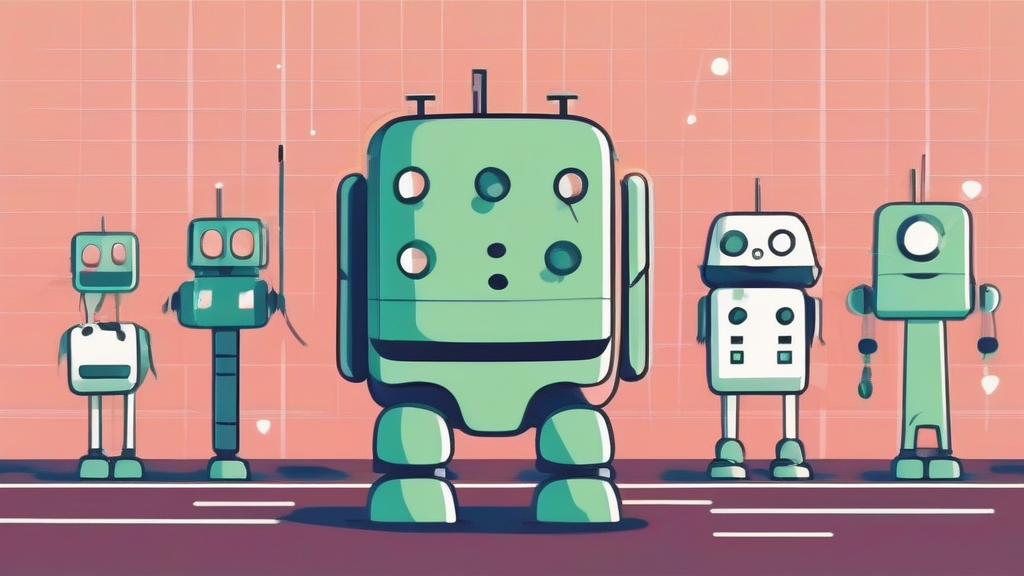
Behind the Bots: A Simple Guide to How AI Algorithms Learn and Make Decisions
Have you ever wondered how your smart speaker understands your commands, or how Netflix seems to know exactly what you want to watch next? It all boils down to artificial intelligence, and specifically, the algorithms that power it. Today, I want to pull back the curtain and offer you a truly What is Artificial Intelligence? A Complete Beginner's Guide to understanding how these intelligent systems learn and make decisions. It's not as complex as it might seem, I promise. For many, AI feels like a black box – a magical entity that just does things. But the reality is far more fascinating and, frankly, more logical. These systems are built on principles that, once understood, reveal a world of incredible potential, especially for us as individuals and for online business owners looking for practical solutions. Let's break down the core mechanics together.Key Takeaways:
- AI learns through data: Just like humans, AI systems get smarter by processing vast amounts of information, identifying patterns, and making connections.
- Algorithms are the 'recipes': These are the specific instructions and rules that tell an AI how to learn and how to make predictions or decisions based on its training.
- It's not magic, it's math: While sophisticated, the core of AI relies on mathematical models and computational power to mimic human-like intelligence in specific tasks.
What is Artificial Intelligence? A Complete Beginner's Guide to Understanding the Core
At its heart, Artificial Intelligence (AI) refers to the simulation of human intelligence in machines that are programmed to think like humans and mimic their actions. It’s a broad field encompassing machine learning, deep learning, natural language processing, computer vision, and much more. Think about it: the goal isn't necessarily to create a conscious being, but rather to develop systems that can perform tasks that typically require human intelligence, like problem-solving, learning, understanding language, or recognizing objects. The journey of AI began decades ago, with early pioneers envisioning machines that could reason. Over time, advancements in computing power and the availability of vast datasets have transformed these early concepts into the powerful tools we interact with daily. We've moved from simple rule-based systems to complex neural networks that can adapt and evolve. It’s a testament to human ingenuity, really, that we’ve managed to impart a semblance of our own cognitive abilities to silicon and code. We often categorize AI into different types. Narrow AI, or weak AI, is what we largely have today – systems designed and trained for a particular task, like playing chess or recommending products. Then there's Artificial General Intelligence (AGI), which aims for human-level cognitive abilities across a wide range of tasks, something still largely in the realm of research and science fiction. And finally, Artificial Superintelligence (ASI), which would surpass human intellect in virtually every field. For now, our focus remains firmly on the practical applications of narrow AI.The Brains Behind the Bots: How AI Algorithms Learn
The real magic, if you can call it that, lies in how these AI systems actually learn. It's not about programming every single possible scenario; that would be impossible. Instead, we give them the tools and data to figure things out for themselves. This process is largely driven by what we call machine learning.Machine Learning Fundamentals
Machine learning is a subfield of AI that gives computers the ability to learn without being explicitly programmed. Instead of writing code for every possible outcome, we feed the algorithms data, and they learn to identify patterns, make predictions, or take decisions based on that data. It's like teaching a child by showing them examples rather than giving them a rigid set of instructions for every single situation. There are three primary types of machine learning that form the backbone of most AI systems: * Supervised Learning: This is probably the most common type. Here, the AI is trained on a dataset that is "labeled," meaning each piece of input data has a corresponding output label. Imagine showing an AI thousands of pictures of cats and dogs, with each picture clearly marked "cat" or "dog." The algorithm learns to associate features (like whiskers or floppy ears) with the correct label. Once trained, it can then accurately classify new, unseen images. This is what powers things like spam filters or image recognition. * Unsupervised Learning: In this scenario, the AI is given unlabeled data and told to find patterns or structures within it. There's no "right answer" to learn from initially. For example, you might give an AI a large dataset of customer purchasing habits and ask it to group customers into different segments based on their similarities. The AI might discover distinct groups that you hadn't even considered. This is fantastic for things like market segmentation or anomaly detection. * Reinforcement Learning: This type of learning involves an AI agent learning to make decisions by performing actions in an environment and receiving rewards or penalties. Think of it like training a pet: good behavior gets a treat, bad behavior gets a scolding (or nothing). The AI learns through trial and error to maximize its cumulative reward over time. This is often used in robotics, self-driving cars, and game-playing AI, where the system has to navigate complex environments and make sequential decisions. You can learn more about this fascinating field by exploring the concept of machine learning on Wikipedia.Neural Networks and Deep Learning
When we talk about the cutting edge of AI, especially in areas like image and speech recognition, we're often talking about deep learning. Deep learning is a specialized subset of machine learning that uses structures called artificial neural networks. These networks are loosely inspired by the structure and function of the human brain. An artificial neural network consists of layers of interconnected "nodes" or "neurons." Data enters the input layer, passes through one or more "hidden layers," and finally reaches the output layer. Each connection between nodes has a "weight," which determines the strength and influence of one node's output on another. During the learning process, these weights are adjusted repeatedly as the network processes data and receives feedback. Think of it this way: when you look at an image, your brain processes it through multiple stages – first edges, then shapes, then objects. A deep neural network does something similar. Each hidden layer learns to identify increasingly complex features from the input data. For instance, the first layer might detect simple lines, the next might combine lines to form shapes, and a deeper layer might combine shapes to recognize entire objects like faces or cars. This layered approach allows deep learning models to learn incredibly intricate patterns from vast amounts of data, leading to breakthroughs in areas that were previously very challenging for AI. You can delve deeper into the mechanics of an artificial neural network on its dedicated Wikipedia page.Making Sense of the World: How AI Makes Decisions
Learning is one thing, but making useful decisions or predictions based on that learning is where AI truly shines and offers practical value. Once an AI algorithm has been trained on sufficient data, it moves from being a student to a decision-maker (or at least, a highly capable predictor).From Learning to Action
The transition from learning patterns to making decisions involves applying the knowledge gained during training to new, unseen data. For example, if a supervised learning model was trained to classify emails as "spam" or "not spam," when a new email arrives, it analyzes its features (keywords, sender, formatting) and, based on its learned patterns, assigns it a classification. This is a prediction, a decision if you will, about the nature of that email. Different algorithms employ various methods for decision-making. Some use what are called decision trees, which are like flowcharts that guide the AI through a series of questions to arrive at a conclusion. Others use regression models to predict a continuous value, like the future price of a stock or the likelihood of a customer churning. The method chosen depends entirely on the problem the AI is designed to solve.Data, Data, Data
It's impossible to talk about AI learning and decision-making without emphasizing the absolutely critical role of data. AI systems are only as good as the data they are trained on. High-quality, diverse, and representative data is paramount. If your training data is biased, incomplete, or simply bad, your AI will learn those biases and make flawed decisions. It's a classic "garbage in, garbage out" scenario. Consider a facial recognition system trained predominantly on images of one demographic. It might perform brilliantly for that group but struggle significantly with others, leading to unfair or incorrect identifications. This highlights why data curation and ethical considerations are so vital in AI development. As individuals and business owners, understanding this makes us more discerning users and developers of AI technologies.The Feedback Loop
AI isn't a "train once and forget" technology. Many advanced AI systems incorporate a feedback loop, allowing them to continuously learn and improve over time. For instance, if an AI recommends a product to you, and you consistently ignore or dislike those recommendations, the system can learn from your implicit feedback and adjust its future suggestions. This continuous learning is what makes AI so dynamic and powerful. It’s an iterative process where the model makes a prediction, its performance is evaluated, and then the model is updated to perform better next time. This constant refinement is why AI services often seem to get "smarter" the more you use them. Of course, human oversight remains crucial to ensure these systems are learning appropriately and ethically.Key Takeaways:
- Predictions are decisions: AI applies learned patterns to new data to classify, predict, or generate outputs.
- Data quality is everything: Biased or poor data leads to biased or poor AI decisions.
- Continuous learning: Many AI systems improve over time through feedback loops, refining their algorithms with new interactions.
AI in Your Everyday Life and Business
Now that we've peeled back the layers on how AI algorithms learn and make decisions, let's connect it to the tangible world around us. You're probably interacting with AI more than you realize, and for business owners, the opportunities are truly compelling. Think about your smartphone. Voice assistants like Siri or Google Assistant use natural language processing (a branch of AI) to understand your spoken commands and respond intelligently. Your email's spam filter, as I mentioned, is a classic example of supervised machine learning at work. When you browse products on Amazon or stream movies on Netflix, the recommendation engines are powered by AI algorithms that analyze your past behavior and similar users' preferences to suggest what you might like next. These are incredibly practical solutions that enhance our daily lives. For online business owners, the implications are even more direct and impactful. AI can be leveraged to: * Personalize customer experiences: Tailoring product recommendations, website content, and marketing messages to individual preferences, much like Netflix does. This can significantly boost engagement and conversion rates. * Automate customer service: Chatbots powered by natural language understanding can handle routine customer inquiries 24/7, freeing up human agents for more complex issues. * Optimize operations: AI can analyze sales data to predict demand, manage inventory more efficiently, or even optimize pricing strategies. * Enhance marketing efforts: AI can identify target audiences, predict campaign performance, and even generate ad copy, making your marketing spend more effective. * Fraud detection: AI algorithms are excellent at spotting unusual patterns in transactions that might indicate fraudulent activity, protecting both businesses and customers. Embracing AI isn't about replacing human workers; it's about augmenting human capabilities, automating repetitive tasks, and gaining insights that would be impossible for humans to uncover from vast datasets. It's about working smarter, not just harder.Challenges and the Future of AI
While the potential of AI is immense, it's also important to acknowledge the challenges and ongoing discussions surrounding its development and deployment. We're not just building tools; we're shaping a future. One major concern is ethical AI. As AI systems become more autonomous, ensuring they align with human values and operate without bias is critical. We've seen instances where AI models, due to biased training data, have exhibited discriminatory behavior. Addressing these biases and building transparent, fair, and accountable AI systems is a significant area of research and development. Then there's the concept of explainability. With complex deep learning models, it can sometimes be difficult to understand why an AI made a particular decision. This "black box" problem is a hurdle, especially in sensitive areas like healthcare or finance, where understanding the reasoning behind a decision is crucial. Researchers are actively working on making AI models more interpretable. Of course, the debate around job displacement is also prominent. While AI will undoubtedly automate certain tasks and roles, it's also expected to create new jobs and industries. The key will be adapting and focusing on skills that complement AI, such as creativity, critical thinking, and emotional intelligence. Looking ahead, the future of AI promises even more integration into our lives. We'll likely see more sophisticated personal assistants, more seamless automation in homes and workplaces, and breakthroughs in areas like personalized medicine and climate modeling. The field is constantly evolving, driven by relentless innovation and a growing understanding of both its capabilities and its responsibilities.Conclusion: Demystifying the Digital Brains
So, there you have it – a straightforward look behind the curtain of artificial intelligence. From the foundational concepts of machine learning to the intricate workings of neural networks, I hope you now have a clearer picture of how AI algorithms learn and make decisions. It's a world built on data, algorithms, and continuous refinement, not magic. Understanding these principles isn't just for tech enthusiasts; it's becoming essential for anyone navigating our increasingly digital world, especially business owners keen on leveraging technology for growth. AI is a powerful tool, capable of incredible feats, but its power comes from the careful design and training of its underlying algorithms. By demystifying AI, we empower ourselves to use it more effectively, ethically, and strategically. Are you ready to explore how AI can transform your own operations or simply better understand the technology shaping your world? The journey into AI is just beginning, and with this guide, you've taken a significant first step.Frequently Asked Questions (FAQ)
What is the difference between AI, Machine Learning, and Deep Learning?
Artificial Intelligence (AI) is the broadest concept, referring to machines simulating human intelligence. Machine Learning (ML) is a subset of AI that enables systems to learn from data without explicit programming. Deep Learning (DL) is a subset of ML that uses artificial neural networks with multiple layers to learn complex patterns from large datasets, especially effective for tasks like image and speech recognition.
How does AI learn without being explicitly programmed for every scenario?
AI learns primarily through algorithms that identify patterns in data. Instead of being told "if X, then Y," it's fed many examples of X and Y, and the algorithm figures out the underlying relationship. This process, often called training, allows the AI to generalize from past data and make predictions or decisions on new, unseen data.
Can AI make mistakes or be biased?
Yes, AI can absolutely make mistakes and exhibit bias. Its performance is heavily dependent on the quality and representativeness of its training data. If the data contains biases or inaccuracies, the AI will learn and perpetuate those biases in its decisions. Developers must meticulously curate data and implement ethical safeguards to minimize these risks.
As artificial intelligence continues to redefine what's possible in the digital space, staying informed and adaptable is your greatest advantage. Mastering AI Tech is deeply committed to evolving alongside these technological breakthroughs, ensuring you always have access to the best resources, technical guidance, and clear industry insights. Take a moment to bookmark this site, explore our upcoming foundational guides, and get ready to enhance your digital skills. The future of technology is already here, and together, we will master it. Leave a comment if you found this informative article helpful. THANK YOU
Post a Comment for "Behind the Bots: A Simple Guide to How AI Algorithms Learn and Make Decisions"