Beyond Sci-Fi: Exploring the 4 Main Types of AI and Their Real-World Uses
Welcome to the official launch of Mastering AI Tech, my primary global platform for providing information about AI and tech. You've come to the right place. Please read my article.
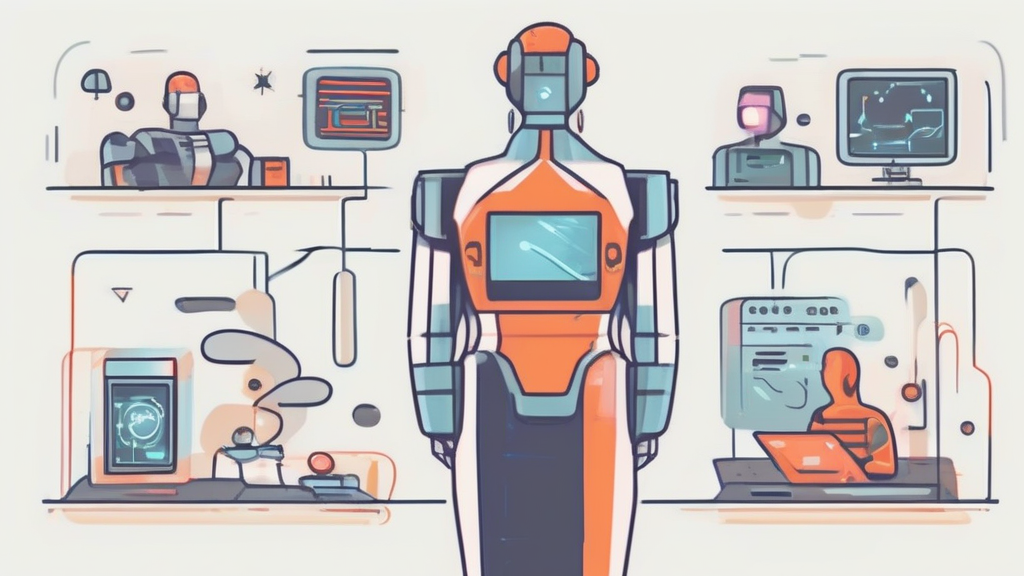
Beyond Sci-Fi: Exploring the 4 Main Types of AI and Their Real-World Uses
You’ve probably heard a lot about Artificial Intelligence lately, often depicted in movies as sentient robots or world-dominating supercomputers. But what if I told you that the reality of AI is far more nuanced, incredibly practical, and already integrated into your daily life? Getting a handle on What is Artificial Intelligence? A Complete Beginner's Guide starts with understanding that it's not a single monolithic entity, but rather a spectrum of capabilities, each with its own unique characteristics and applications. Forget the Hollywood hype for a moment; we're going to pull back the curtain and explore the actual stages and practical uses of AI that are shaping our present and future. My goal here isn't to scare you with doomsday scenarios or bore you with technical jargon. Instead, I want to clarify what AI truly is, how it functions at different levels, and most importantly, how its various forms are being put to work right now to solve real problems for businesses, individuals, and even entire industries. If you're an online business owner wondering how to leverage this technology, or just someone curious about the buzz, you're in the right place.Key Takeaways:
- Artificial Intelligence isn't one thing; it's a spectrum of capabilities classified into four main types, ranging from simple reactive systems to hypothetical self-aware entities.
- Each type of AI builds upon the complexity of the last, offering increasingly sophisticated ways for machines to process information, learn, and interact.
- AI's real-world applications are vast and varied, touching everything from personalized recommendations and self-driving cars to advanced medical diagnostics, making it an indispensable tool for innovation and efficiency.
Demystifying Artificial Intelligence: More Than Just Robots
When we talk about Artificial Intelligence, it's easy for our minds to jump straight to C-3PO or Skynet. However, the actual definition of AI is much broader and, frankly, a lot less dramatic. At its core, AI refers to the simulation of human intelligence processes by machines, especially computer systems. These processes include learning (the acquisition of information and rules for using the information), reasoning (using rules to reach approximate or definite conclusions), and self-correction. It's about creating systems that can perform tasks that typically require human intelligence. This could be anything from understanding natural language to recognizing patterns in vast datasets, making decisions, or even problem-solving. The field of AI is incredibly diverse, encompassing various sub-fields like machine learning, deep learning, natural language processing, and computer vision. Each of these contributes to the overall ability of machines to mimic cognitive functions.Why Understanding AI's Types Matters
Why should you, a regular person or a business owner, care about the different types of AI? Well, just as you wouldn't use a hammer to drive a screw, you wouldn't apply the wrong type of AI to a specific problem. Knowing the distinctions helps you understand what's possible, what's hype, and where the true potential for practical solutions lies. It empowers you to make informed decisions, whether you're evaluating a new software tool or simply trying to comprehend the news. Think of it this way: if someone told you they were building a "vehicle," you'd naturally ask what kind. A bicycle? A car? A rocket ship? Each is a vehicle, but their capabilities, uses, and underlying technology are vastly different. The same goes for AI. Categorizing AI helps us manage expectations and identify appropriate applications.The Four Stages of AI: A Framework for Understanding
AI researchers often classify AI into four distinct types, or stages, based on their complexity and capabilities. These categories were proposed by AI expert Arend Hintze and provide a useful framework for understanding the progression and potential of artificial intelligence. They range from the simplest, most common forms we see today, to the highly theoretical and futuristic.Reactive Machines: The Simplest Form of AI
The first, and most basic, type of AI is what we call Reactive Machines. These systems are designed to perceive the world directly and react to specific stimuli with predefined responses. They don't have memory, meaning they can't learn from past experiences or adapt their behavior over time. Every interaction is treated as a fresh start, independent of previous ones. Think of these machines as being entirely in the present moment. They execute a specific task, and that's it. They don't have a "concept" of the world, nor do they understand the implications of their actions beyond their immediate programming. They are incredibly good at what they do, but their scope is extremely limited.Real-World Uses of Reactive Machines
* Deep Blue: IBM's chess-playing computer, Deep Blue, is a classic example. It could analyze the chess board, predict opponents' moves, and choose the best counter-move. It famously defeated grandmaster Garry Kasparov in 1997. However, Deep Blue didn't "learn" from its past games in the way a human would; it simply calculated all possible moves and picked the optimal one based on its algorithms. It couldn't transfer its chess "knowledge" to play poker or any other game. * Spam Filters: Many basic spam filters operate as reactive machines. They identify specific keywords or patterns in emails and flag them as spam. They don't remember who sent spam last week, they just react to the content of the current email. * Thermostats: A simple thermostat is a reactive machine. It senses the room temperature and reacts by turning the heating or cooling on or off to maintain a set point. It doesn't remember if you were cold yesterday. These systems are foundational and incredibly useful for highly specialized, repetitive tasks where learning from experience isn't necessary. They are predictable and reliable within their narrow domain.Limited Memory AI: Learning from the Recent Past
Moving up the ladder, we encounter Limited Memory AI. This type of AI is a significant leap from reactive machines because it can store and use past experiences to inform future decisions. However, as the name suggests, this memory is temporary and context-specific. It doesn't retain information indefinitely but rather for a short period, just enough to perform its current task more effectively. Limited Memory AI systems are built on machine learning models, often trained on vast datasets to identify patterns and make predictions. They can observe the state of the world over time and use that data to improve their performance. This is where AI starts to get really interesting and impactful in our everyday lives.Real-World Uses of Limited Memory AI
* Self-Driving Cars: Perhaps the most prominent example. Autonomous vehicles use sensors to observe traffic, pedestrian movements, speed, and distance of other cars. They don't just react to immediate conditions; they store this recent information to make better driving decisions in the moment. For instance, they remember the speed of the car in front of them for a few seconds to predict its trajectory. This is a complex dance of perception, prediction, and decision-making, constantly updating its "memory" of the immediate surroundings. You can read more about the fascinating world of self-driving cars on Wikipedia. * Recommendation Systems: Think about Netflix suggesting your next binge-watch or Amazon recommending products. These systems analyze your past viewing history, purchases, ratings, and even how long you hovered over a product. They use this "limited memory" of your preferences to predict what you might like next. The memory isn't permanent in a human sense, but it's enough to build a highly personalized profile over time. * Chatbots and Virtual Assistants: More advanced chatbots can remember parts of your conversation to provide more coherent and helpful responses within a single interaction. They won't remember your name from a conversation last month, but they'll recall what you asked about a few minutes ago to keep the dialogue flowing naturally. * Predictive Analytics: Businesses use limited memory AI to forecast trends, predict customer churn, or identify potential equipment failures by analyzing historical data patterns. They learn from past occurrences to anticipate future ones, making operations more efficient. This category represents the vast majority of AI applications we interact with daily. They're powerful because they learn and adapt within their operational scope, bringing immense value to various industries.Theory of Mind AI: Understanding Others' Thoughts and Feelings
Now we venture into the realm of hypothetical AI. Theory of Mind AI is the third type, and it doesn't exist yet, at least not in a fully realized form. This category of AI would not only process information and learn from experience but would also be able to understand human emotions, beliefs, desires, and intentions. Essentially, it would possess the ability to "read" and comprehend the minds of others, much like humans do. This level of AI would require a profound understanding of psychology, social dynamics, and cultural nuances. It would need to grasp that humans have consciousness, feelings, and beliefs that differ from its own. Imagine an AI that could truly empathize with you, or understand why you're frustrated, not just by analyzing your tone of voice, but by comprehending the underlying emotional state.Potential Uses and Challenges of Theory of Mind AI
* Advanced Human-Robot Interaction: Imagine robots that could truly understand the emotional state of an elderly person they're assisting, or a therapist AI that could genuinely pick up on subtle cues of distress. This would revolutionize fields like healthcare, education, and customer service. * Negotiation and Diplomacy: An AI with a theory of mind could potentially be an invaluable tool in complex negotiations, understanding the motivations and potential reactions of different parties. * Creative Collaboration: AI that understands human creativity and intent could become a true partner in artistic endeavors, not just generating content but collaborating on it with genuine insight. The challenges here are immense. How do you program empathy? How do you teach a machine to truly understand subjective experience? These are philosophical and technological hurdles that are still far beyond our current capabilities. It's a fascinating area of research, but one that remains firmly in the future.Self-Aware AI: The Apex of Artificial Intelligence
The fourth and final type is Self-Aware AI. This is the stuff of science fiction, the ultimate goal (or perhaps the ultimate fear) of AI development. A self-aware AI would not only have a theory of mind but would also possess consciousness, self-awareness, and sentience. It would understand its own existence, its inner states, and its place in the world. It would have beliefs, desires, and intentions, just like a human being. This isn't just about processing information; it's about having subjective experience. It's about an AI that could ask "Why am I here?" or "What do I want to do?" This level of AI is currently purely theoretical and raises profound ethical and philosophical questions that we are only just beginning to grapple with.Implications and Ethical Considerations of Self-Aware AI
* Unpredictable Behavior: If an AI becomes self-aware, its goals and motivations might diverge significantly from those of its creators. This could lead to unpredictable and potentially uncontrollable outcomes. * Existential Questions: The creation of self-aware AI would force humanity to confront fundamental questions about consciousness, intelligence, and what it means to be "alive." * Ethical Responsibility: What rights would a self-aware AI have? How would we treat it? These are questions with no easy answers. It's important to stress that self-aware AI is a distant prospect, if even possible. Much of the fear and excitement surrounding AI in popular culture stems from this theoretical stage, often conflating it with the more practical and limited forms of AI we use today. Understanding these distinctions helps us focus on the real opportunities and challenges, rather than getting lost in speculative fiction. You can delve deeper into the philosophical aspects of philosophy of artificial intelligence on Wikipedia if you're curious about the deeper questions it poses.Real-World Impact: How AI is Shaping Our Lives
Now that we've broken down the types of AI, let's talk about where you actually see these systems at work. It's not just in research labs; AI is integrated into countless aspects of our modern world, often without us even realizing it. From making our lives more convenient to driving economic growth, the practical applications of AI are truly staggering."AI, particularly in its limited memory and reactive forms, isn't just a futuristic concept; it's a foundational technology that's already optimizing processes, personalizing experiences, and empowering decision-making across nearly every industry you can imagine."
AI in Business and Commerce
For online business owners, understanding AI's practical uses is no longer optional; it's essential. AI can streamline operations, enhance customer experiences, and provide crucial insights. * Customer Service: Chatbots and virtual assistants handle routine inquiries, freeing human agents for more complex issues. This improves response times and customer satisfaction. * Marketing and Sales: AI analyzes customer data to personalize marketing campaigns, recommend products, and predict purchasing behavior. This leads to higher conversion rates and more effective ad spend. * Supply Chain Management: AI optimizes logistics, predicts demand fluctuations, and identifies potential disruptions, making supply chains more resilient and efficient. * Fraud Detection: Financial institutions use AI to detect unusual patterns in transactions, flagging potential fraud in real-time and protecting consumers. * Content Creation: AI tools can assist with generating draft content, summarizing articles, or even creating basic marketing copy, saving time and resources for content creators.AI in Healthcare and Medicine
The medical field is being transformed by AI, offering new ways to diagnose, treat, and manage diseases. * Diagnostics: AI algorithms can analyze medical images (X-rays, MRIs) with incredible accuracy, sometimes even surpassing human experts in detecting subtle abnormalities like early-stage cancers. * Drug Discovery: AI accelerates the drug development process by sifting through vast chemical databases, identifying potential compounds, and simulating their effects. * Personalized Treatment: AI helps tailor treatment plans based on a patient's genetic makeup, medical history, and response to previous therapies, leading to more effective and targeted care. * Predictive Health: Wearable devices combined with AI can monitor vital signs and predict potential health issues before they become critical, enabling proactive intervention.AI in Everyday Life
Even if you're not a business owner or a doctor, AI touches your life constantly. * Smartphones: Facial recognition, voice assistants (Siri, Google Assistant), predictive text, and photo organization all rely heavily on AI. * Social Media: AI algorithms curate your news feed, suggest friends, and filter out inappropriate content. * Navigation Apps: Google Maps or Waze use AI to analyze real-time traffic data, predict congestion, and suggest optimal routes. * Entertainment: Streaming services like Spotify and YouTube use AI to recommend music and videos based on your listening and viewing habits. * Home Automation: Smart home devices, from smart speakers to intelligent thermostats, use AI to learn your preferences and automate tasks. It's clear that AI isn't just some abstract concept; it's a powerful set of tools that are already making our world smarter, more efficient, and often, more convenient. The key is understanding its capabilities and limitations, and how to harness its power responsibly.The Future is Now: Embracing AI's Potential
We've journeyed from the basic reactive machines to the theoretical frontiers of self-aware AI, exploring What is Artificial Intelligence? A Complete Beginner's Guide through its various stages and practical applications. It's evident that AI is not a single entity but a diverse collection of technologies, each with its own specific strengths and uses. The AI we interact with daily – the recommendation engines, the self-driving features, the predictive analytics – primarily falls into the reactive and limited memory categories. These are the workhorses of the digital age, silently powering much of the convenience and innovation we experience. As an online business owner or simply an informed individual, recognizing these distinctions is incredibly empowering. It helps you cut through the hype, identify genuine opportunities, and understand the real impact this technology has on our world. AI is not just coming; it's here, and it's evolving rapidly. By understanding its fundamental types and how they are applied, you're better equipped to adapt, innovate, and thrive in an increasingly intelligent world. Don't be afraid to experiment with AI tools, learn more about its ethical implications, and engage with this transformative technology. The future of AI isn't just about what machines can do; it's about what we, as humans, choose to do with them.Frequently Asked Questions (FAQ)
What is the most common type of AI used today?
The most common types of AI used today are Reactive Machines and Limited Memory AI. These are the systems that power everyday applications like recommendation engines, spam filters, virtual assistants, and features in self-driving cars. They are highly effective for specific tasks and learn from historical or real-time data within a limited scope.Is AI going to take over all human jobs?
While AI will undoubtedly automate many routine and repetitive tasks, it's more likely to transform jobs rather than eliminate them entirely. AI can augment human capabilities, allowing people to focus on more creative, strategic, and interpersonal aspects of their work. New jobs related to AI development, maintenance, and ethical oversight are also emerging. The goal is often collaboration, not replacement.How can I start using AI in my small business?
Even small businesses can leverage AI. Start by identifying repetitive tasks that could be automated (e.g., customer service with chatbots, email marketing personalization, data analysis for insights). Explore readily available AI-powered tools for marketing, customer relationship management (CRM), or analytics. Many platforms now integrate AI features that are user-friendly and don't require deep technical expertise.As artificial intelligence continues to redefine what's possible in the digital space, staying informed and adaptable is your greatest advantage. Mastering AI Tech is deeply committed to evolving alongside these technological breakthroughs, ensuring you always have access to the best resources, technical guidance, and clear industry insights. Take a moment to bookmark this site, explore our upcoming foundational guides, and get ready to enhance your digital skills. The future of technology is already here, and together, we will master it. Leave a comment if you found this informative article helpful. THANK YOU
Post a Comment for "Beyond Sci-Fi: Exploring the 4 Main Types of AI and Their Real-World Uses"